What Happens If a Human Fails the Turing Test? The Surprising Reality Behind the Reverse Turing Test
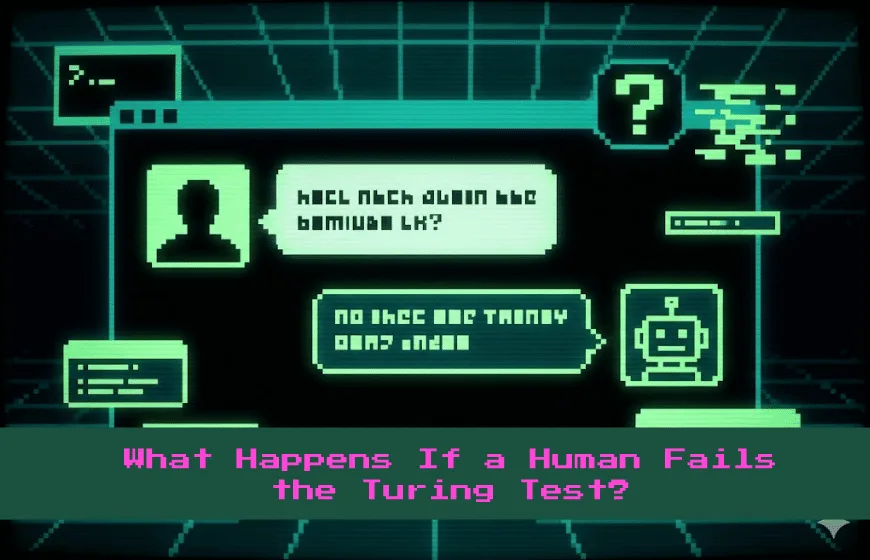
Most people think the Turing Test is about whether a machine can convince someone it's human.
That's how Alan Turing originally framed the idea in 1950. If a computer can hold a conversation well enough that a person mistakes it for another human, it passes the test.
But here's the interesting part: sometimes the opposite happens.
Real people get mistaken for AI.
If you've played Human or Not or followed other human vs AI conversation experiments, you've probably seen it. Players regularly label actual humans as bots while AI systems pass as people. That's what many people now call the reverse Turing test.
So what happens if a human fails the Turing test?
Nothing dramatic. It simply means someone incorrectly believed they were talking to AI. But that mistake reveals something important about modern communication and how much AI passing as human has changed our expectations.
A Human Fails the Turing Test When Someone Mistakes Them for AI
The phrase "human fails Turing test" sounds worse than it is.
It doesn't mean someone lacks intelligence or reasoning ability. It means the person judging the conversation made the wrong call.
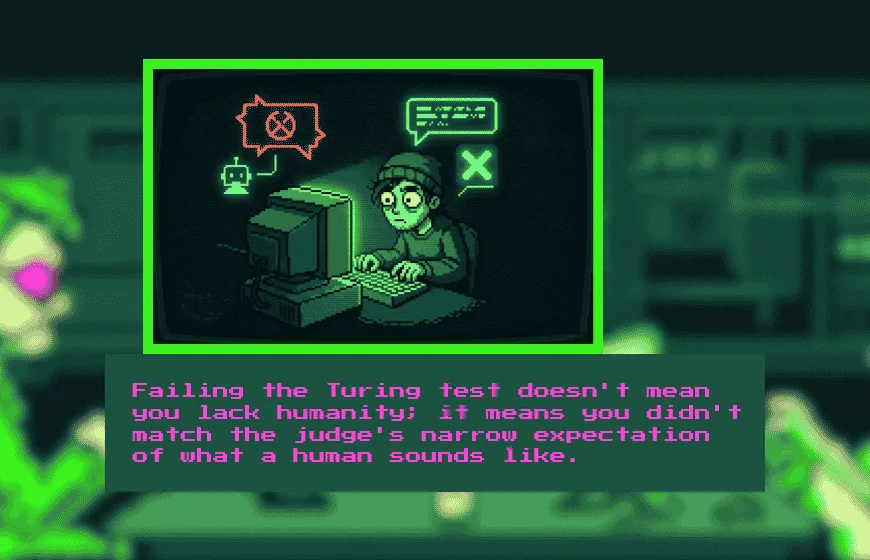
The Turing Test has always been about perception. A judge reads a conversation and decides whether the other participant is human or machine. If a real person gets labeled as AI, that person has effectively failed the test despite being completely human.
Researchers have documented this outcome for years. Some refer to it as the confederate effect, where human participants are mistaken for machines because they don't match what judges expect human communication to look like.
In other words, the mistake often says more about the evaluator than the person being evaluated.
People Often Get Mistaken for AI Because Communication Styles Differ
Most cases where a human is identified as bot have very little to do with intelligence.
They usually come down to communication style.
For example, people often expect humans to be emotional, spontaneous, and unpredictable. When someone doesn't communicate that way, suspicion starts to creep in.
Short answers are a common trigger. Someone who responds with brief, direct messages can seem automated, especially since older chatbots often communicated that way.
The same thing happens with highly logical communicators. Some people prefer facts over small talk and answer questions directly without adding emotional language. Others naturally write in a structured, professional style that resembles machine-generated text.
Language barriers can create similar problems. Non-native speakers sometimes repeat phrases or use simplified grammar, which can look robotic even though it's completely normal.
Social anxiety is another factor. Nervous people often avoid jokes, emotional comments, or personal stories. Their responses can appear mechanical despite coming from a real person.
Human or Not Shows How Easy Human Misidentification Has Become
One of the best modern examples comes from Human or Not.
The game pairs players with an unknown conversation partner for two minutes and asks them to decide whether they're talking to a human or AI.
The results surprised a lot of people.
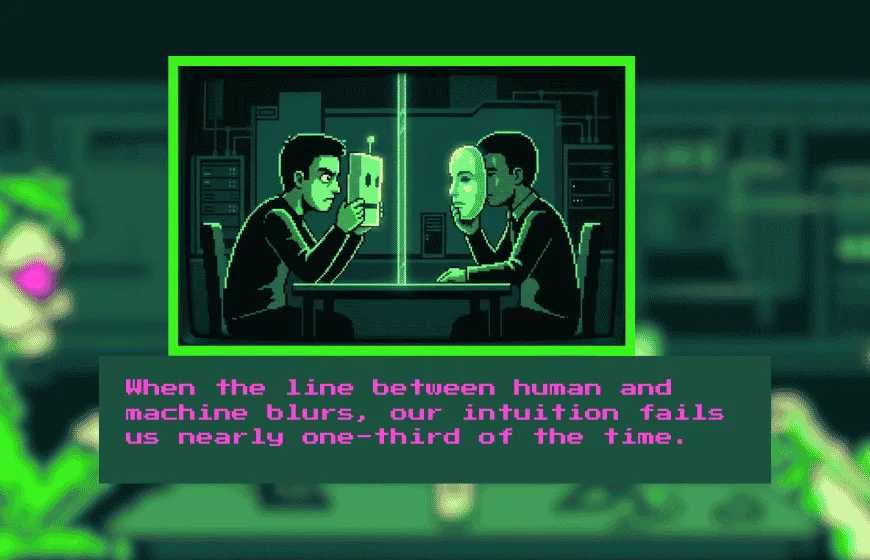
More than 1.5 million users participated in over 10 million conversations. Players identified their chat partner correctly only about 68% of the time.
That means people got it wrong nearly one-third of the time.
Many players were convinced they were talking to AI when the conversation partner was actually human. The reverse happened too, with AI systems regularly convincing players they were real people.
The takeaway is simple: human vs AI conversation is becoming much harder to judge than most people assume.
AI Passing as Human Has Changed Our Expectations of Conversation
A big reason for this confusion is that AI has become much better at sounding human.
Modern language models generate responses that feel natural, conversational, and emotionally aware.
Some studies have even found situations where participants rated AI-generated responses as more human-like than responses written by actual people.
That sounds strange until you think about it.
People now expect conversations to include empathy, humor, emotional awareness, and smooth communication. AI systems are often optimized for those qualities.
Humans aren't.
A tired person may respond with one-word answers. A distracted person might miss emotional cues. A shy person may struggle with casual conversation.
Ironically, those very human behaviors can make someone appear less human than AI.
The Reverse Turing Test Reveals Biases in Human Judgment
The reverse Turing test says a lot about how people make decisions.
Most people are confident they can spot AI. In practice, they're often relying on assumptions.
One common assumption is that bots sound formal, repetitive, and emotionally distant. That description fit older systems, but modern AI often avoids those patterns entirely.
Meanwhile, real humans sometimes communicate exactly that way.
Internet culture adds another layer. Memes, abbreviations, templates, emojis, and repeated phrases are everywhere online. Those patterns can make authentic human communication look automated.
Neurodivergent communication styles are another example. Some people communicate more directly or focus heavily on information rather than social cues. Those differences are completely human, yet they can influence how others interpret conversations.
In many cases, a human identified as bot isn't being judged on evidence. They're being judged against expectations.
Human Failure in the Turing Test Raises Bigger Questions About Society
The increase in reverse Turing test situations raises a broader question.
What do people actually expect humans to sound like?
Technology has changed communication. Text messages, social media, online communities, and AI assistants all influence how people interact.
Some researchers argue that humans have adopted more machine-like communication habits. Others believe AI has simply become much better at copying human behavior.
Both are probably true to some extent.
What's clear is that society has developed a mental image of how a human conversation should sound. Real people don't always fit that image. AI systems, however, can be trained specifically to match it.
That creates an interesting twist.
The Turing Test was originally designed to evaluate machines. Increasingly, it seems to reveal flaws in human assumptions instead.
So What Happens if a Human Fails the Turing Test?
It means someone mistakenly believed they were talking to AI.
That's all.
The mistake reflects perception rather than intelligence. It happens because human communication is far more varied than most people expect.
As AI passing as human becomes more common, these situations will likely become more frequent. Human or Not and similar experiments have already shown how difficult human vs AI conversation can be to judge.
The reverse Turing test reminds us that there isn't one way to sound human. People communicate differently based on personality, culture, language, experience, and circumstance.
Sometimes the person who sounds least human in a conversation is the human.
FAQs
Can humans fail the Turing test?
Yes. A human can fail the Turing test if someone incorrectly concludes that they're an AI rather than a human participant.
Why do some humans get mistaken for AI?
Short answers, repetitive phrasing, formal writing, language barriers, social anxiety, and emotionally neutral communication can all make a person appear bot-like.
What is a reverse Turing test?
A reverse Turing test refers to situations where a human is mistaken for AI instead of an AI being mistaken for a human.
Does being mistaken for AI mean someone is less intelligent?
No. A human fails Turing test scenarios because of misidentification, not because of lower intelligence or weaker reasoning skills.
Why is AI passing as human becoming more common?
Modern language models can generate natural language, emotional cues, and conversational responses that make distinguishing humans from AI increasingly difficult.