The Turing Test: Can Machines Really Pass the Imitation Game?
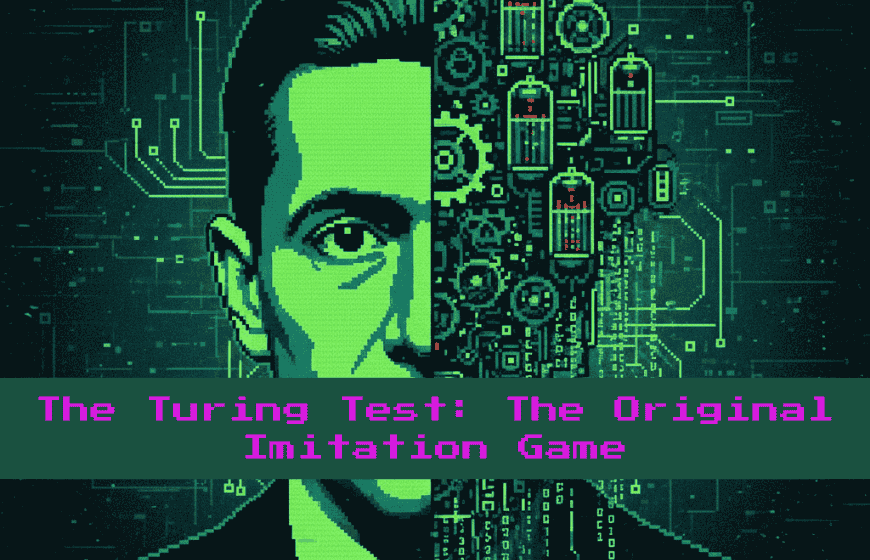
The Turing test remains the most famous way to test whether computers could display intelligent behavior similar to a human. In 1950, Alan Turing devised a simple but profound experiment. He wanted to move past the vague question of "Can machines think?" Instead, he proposed a practical contest called the imitation game.
How Alan Turing Defined the Turing Test
To understand the Turing test, we must look at how the game actually works. The setup involves three participants: the interrogator, a human subject, and a machine. They are all separated in different rooms. Communication happens via text through a screen and keyboard. This setup ensures the judge cannot see or hear the participants.
The interrogator speaks to both parties simultaneously. Their goal is to determine which participant is the human and which is the machine. If the judge cannot reliably tell them apart, the model has successfully passed the test. Turing thought that if a machine could fool a judge, it showed true intelligence.
The Role of the Interrogator and Conversation
In a Turing test, the interrogator has total freedom. They can ask open ended questions about virtually any topic. You might discuss the style of an oil painting or debate recent research. This freedom is what makes the game so difficult for AI models.
Logic: Can the machine solve a riddle?
Emotion: Does it react naturally to sad stories?
Data: Can it recall facts without sounding like a database?
The nature of the conversation allows the judge to look for "tells." Most users find that AI models eventually reveal themselves through repetitive language patterns. However, as technology has improved over time, these gaps are closing.
Why the Imitation Game Matters Today
When Alan Turing devised this test, he was looking at the future of machine learning. He believed that by the year 2000, computers would have enough data to win easily. While his timeline was a bit early, modern AI now uses large language models to mimic human speech perfectly.
Today, we see this in action on every site that uses chatbots. Whether you are playing a game or seeking support, you are part of a mini Turing test. We constantly ask ourselves if the text we see was generated by a person or a computer.
Want to test your own ability to tell humans from AI? Try Human or Not—a modern take on the imitation game.
Understanding AI Models and Language
Modern research into AI models focuses on how they process data. To pass the test, a model needs more than just facts. It needs to understand the nuance of how users speak.
If you look at an AI generated image, you might see a beautiful oil painting of Alan Turing. While the image looks real, the machine doesn't "know" who he is. It only understands the style and data it was trained on. The same applies to text. A model can write a poem, but it doesn't feel the words.
For more on how modern LLMs perform on Turing-style tests, see Does GPT-4 Pass the Turing Test?