Why It Feels Strange When a Chatbot Compliments You

Ever notice that tiny pause in your brain when a chatbot says something nice? Not a big reaction. Just… a flicker. Like, wait—did that feel good, or was that weird?
It’s a small moment, but it sticks. And honestly, you’re not the only one catching that odd vibe.
So… why does praise from AI feel off?
Let’s be real for a second. When a person compliments you, there’s history, tone, maybe even a bit of awkward eye contact. There’s context. With a chatbot? None of that baggage exists.
Which sounds great. But also… not.
Sometimes it feels hollow. Other times, oddly comforting. Kind of like getting a “nice job” from a vending machine that just dispensed your snack. Technically pleasant, but also—what?
That tension comes from a mismatch. We know it’s code. Lines of logic. Yet it talks like it cares. That gap is where the weirdness lives.
The Brain Doesn’t Quite Know What to Do With It
Psychologically, this is still a gray area. People react in all sorts of ways.
Some shrug it off. Others, surprisingly, feel a little boost—like, hey, I’ll take the compliment anyway. No shame there. But then there are folks who feel uneasy, even suspicious.

Because let’s be honest, if something praises you without feeling anything… does it count?
Maybe yes. Maybe not. Depends on your mood that day, I guess.
Social Rules Are… Changing (Quietly)
Here’s the thing nobody really talks about much: we’re rewriting social norms in real time.
Not dramatically. Not with headlines. Just in small, everyday interactions.
We used to reserve conversations—real conversations—for humans only. Now, we casually chat with software while waiting in line or lying in bed at 2 a.m. It’s normal. Or at least, it’s becoming normal.
Still, there’s a question lingering under the surface:
Are we supposed to treat these interactions as “real”?
No one has a clear answer yet.
The Slippery Slope: When It Starts Feeling Too Comfortable
There’s also a quieter concern. And it’s not exactly comforting.
Chatbots are easy. They don’t judge. They don’t interrupt. They’re always available. That combination? It can pull people in.
Sometimes a little too much.
If someone starts leaning on AI for emotional support more than actual people, things can tilt out of balance. Not overnight. More like a slow drift. You don’t notice it at first.
Until you do.
Human vs. Machine: Not the Same Game
Let’s draw a line, even if it’s a bit blurry.
Human interaction carries weight—empathy, shared experiences, emotional nuance. It’s messy, imperfect, and sometimes exhausting.
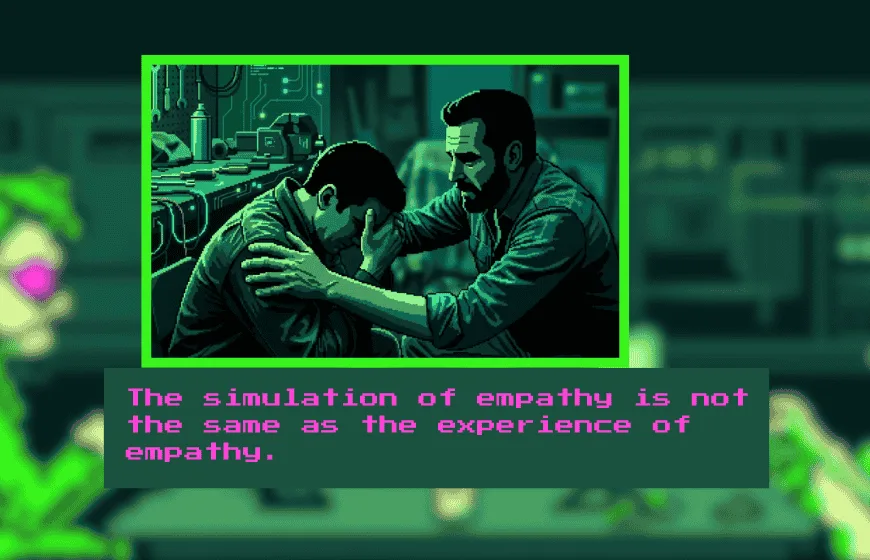
Chatbots, on the other hand, are precise. Predictable (well, mostly). They simulate care, but they don’t feel it.
And that difference? It matters.
That’s why a compliment from AI can land… strangely. It sounds right, but something underneath feels missing.
Where Is All This Headed?
Honestly, it’s hard to say.
AI is getting better. Fast. Conversations are smoother, more natural, less robotic than even a couple of years ago. At some point, the line between human and machine interaction might blur even further.
Will that make things feel less weird? Or more?
Hard to tell.
But one thing seems likely: we’ll need to figure out how to stay grounded in real human connections while still using these tools. Otherwise, things could get a bit… off-balance.
What Experts (and Regular People) Are Noticing
Psychologists are watching this space closely. They’re looking at how people respond emotionally, how habits form, and whether long-term effects show up.
Meanwhile, everyday users are already living it.
Some say chatbots feel like companions. Others say they’d never take them seriously. And then there’s a large group somewhere in the middle—curious, slightly skeptical, but still engaging.
It’s messy. Human, even.
Culture Plays a Bigger Role Than You’d Think
Not everyone reacts the same way.
In some places, people are more open to digital companionship. In others, there’s hesitation, even resistance. That cultural lens shapes how “normal” these interactions feel.
So yeah, your reaction might not just be personal—it could be cultural too.
That odd feeling when a chatbot compliments you? It’s not random. It’s your brain trying to reconcile something new with something deeply human.
And maybe it should feel a little strange. At least for now.
FAQs
1Why do AI compliments feel strange?
AI compliments feel strange because they lack genuine emotion and context, creating a mismatch between human expectations and machine-generated responses.
Can chatbot compliments affect emotions?
Yes, chatbot compliments can trigger real emotional responses, even though users know the interaction is artificial.
Why do AI interactions sometimes feel real?
AI mimics human language patterns effectively, which can make conversations feel natural despite the absence of real empathy.
Is it normal to feel comfort from a chatbot?
Yes, many people feel comfort because chatbots are non-judgmental and always available, even if the connection is artificial.
Are AI companions replacing human interaction?
Not entirely, but over-reliance on AI for emotional support can reduce real human engagement over time.
Why does chatbot praise feel hollow?
Because users know the AI does not genuinely feel or intend the compliment, making it seem surface-level despite sounding correct.
Will AI interactions feel less strange in the future?
Possibly. As AI improves and people adapt, these interactions may feel more natural, though the emotional gap may still remain.