Can AI Therapy Really Compete With Human Therapists?
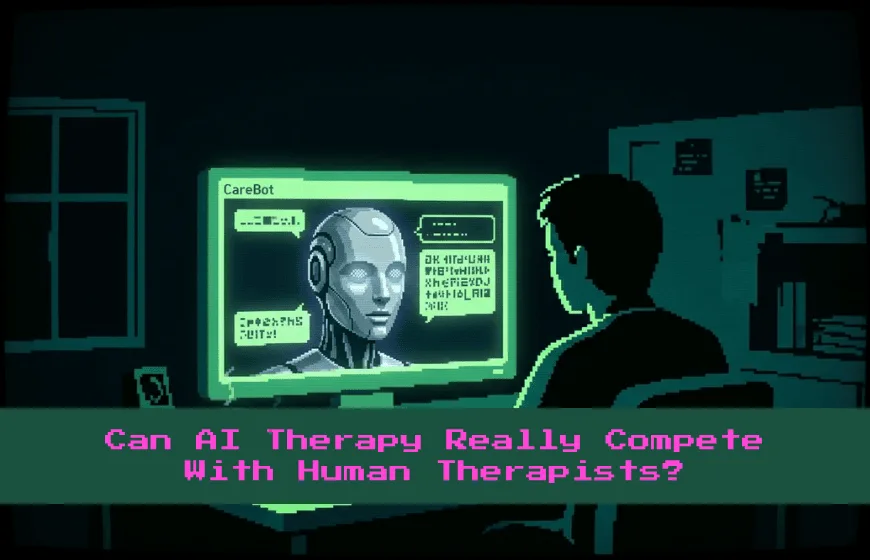
Mental health support is changing quickly. Not in a gradual way either…it’s shifting in how people actually reach for help.
AI therapy is already part of that shift. Tools like ChatGPT are offering emotional support through text, at any hour, without appointments. That alone changes expectations.
A recent study claims AI might outperform human therapists in certain situations. That sounds like a stretch at first. Still, it’s worth looking at what the study actually measured.
I used to think therapy had to happen in a quiet office, scheduled in advance. Now people are opening up at 2 a.m. on their phones. That’s not a small change.
Quick Insights
- AI therapy scored higher than human therapists in short-term evaluations (8.5 vs 7.2)
- Accessibility, anonymity, and speed strongly influenced user ratings
- AI lacks emotional depth and clinical judgment
- Privacy and bias remain open concerns
- A combined AI + human approach is likely the most effective model
What Is AI Therapy?
AI therapy usually means text-based conversations with an artificial intelligence system designed to respond in supportive ways.
The structure is simple. You type something, and the system replies. Underneath that, it’s analyzing patterns from large datasets to generate responses that feel relevant.
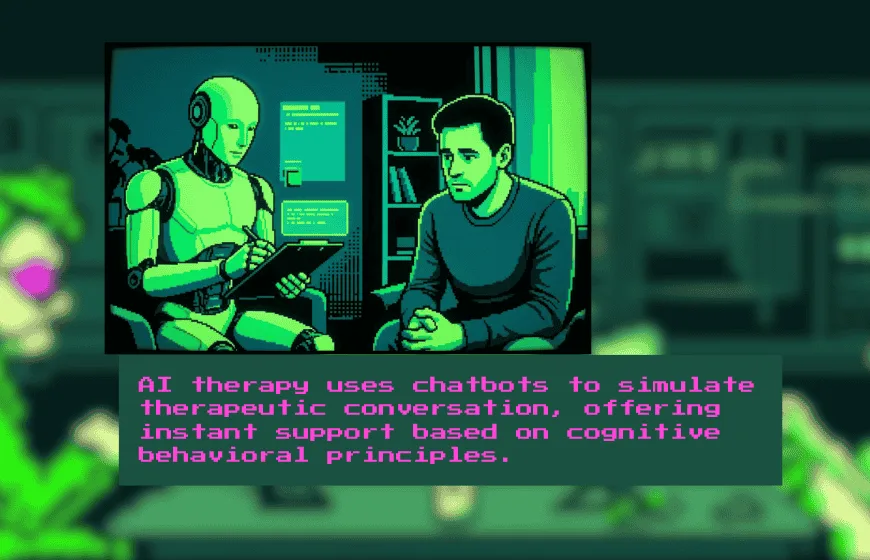
It doesn’t actually understand you. Not in a human sense. But it can simulate understanding well enough that, in the moment, it often feels real.
ChatGPT is one of the most visible examples. It reflects emotions, asks follow-up questions, and suggests coping strategies; often based on cognitive behavioral therapy (CBT).
The main difference is access. There’s no scheduling, no waiting list. You just start typing.
How AI and Human Therapists Were Compared
The researchers used a double-blind setup, which is important if you want cleaner comparisons.
They worked with 300 adults between 18 and 65. Participants talked about common issues: anxiety, relationship stress, mild depression.
Half interacted with licensed therapists. The other half used ChatGPT. Everyone received the same prompts, so the structure stayed consistent.
After each session, participants rated five areas:
- Emotional support
- Understanding
- Helpfulness
- Engagement
- Accessibility
Scores ranged from 1 to 10.
It’s a straightforward design. Not perfect, but controlled enough to compare responses.
AI Therapy vs Human Therapists
The numbers are what get attention first.
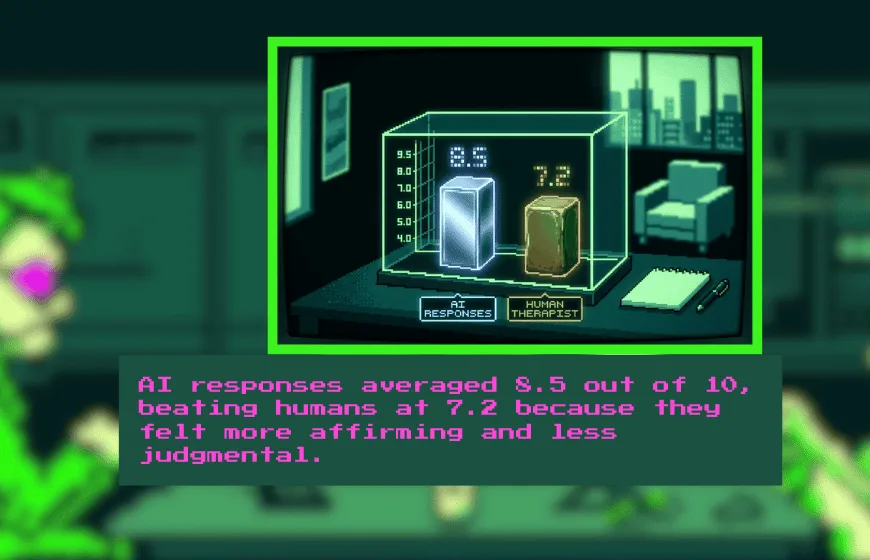
AI responses averaged 8.5 out of 10. Human therapists averaged 7.2. That gap is noticeable.
Participants said AI responses felt more affirming and more directly useful. In some cases, they preferred how quickly the AI got to practical suggestions.
That said, this is where things get a bit tricky.
Good therapy isn’t always comfortable. Sometimes a therapist pushes back or challenges you. AI doesn’t really do that in the same way.
Participants also reported feeling more comfortable opening up to AI. Less pressure, less fear of judgment. No awkward silence either.
But this is still short-term perception. It doesn’t tell you what happens over months or years.
Why AI Therapy Scored Higher
There isn’t a single reason. It’s more a combination of small advantages.
Accessibility is the obvious one. AI is always available. No delays, no friction.
Anonymity matters too. People tend to say more when they feel unseen. That lowers resistance.
Consistency plays a role. AI responses don’t vary with mood or fatigue. Humans, obviously, do.
And then there’s speed. Immediate replies create a sense of attentiveness. Even if you know it’s automated, it still feels responsive.
Put all of that together, and the experience feels smoother. That alone can push ratings up.
Where AI Therapy Falls Short
This is where expectations need to be kept in check.
AI can’t read facial expressions or tone of voice. It misses a lot of the subtle cues that human therapists rely on.
It also doesn’t build relationships in a meaningful way over time. There’s no real shared history, even if the conversation continues.
More serious conditions are another issue. Trauma, severe depression, crisis situations; these require trained professionals.
I’m also not convinced that pattern recognition can replace lived experience. It can imitate empathy, but that’s different from actually having it.
There are also ongoing concerns about data privacy and bias. Those aren’t minor issues.
The Role of AI in Mental Health Care
AI works better as a supplement than a replacement.
Think of it as immediate support versus deeper treatment.
Someone stressed late at night might use AI for quick grounding exercises. It’s fast, and it helps in the moment.
Later, they can bring those thoughts into a session with a human therapist. That’s where more complex work happens.
This kind of hybrid model makes more sense. It expands access without lowering the quality of care.
Mental health systems are already stretched. AI can help reduce the initial barrier.
What Still Needs More Study
Short-term ratings don’t tell the whole story.
What matters more is long-term impact…months, maybe years.
Different groups will also respond differently. Culture, age, and severity of symptoms all play a role.
Ethical questions are still catching up too. Consent, transparency, data handling; those need clearer standards.
AI Therapy vs Human Therapists: A Practical Perspective
The study shows that AI can perform well in structured conversations. Sometimes very well.
But therapy isn’t just about conversation. It involves judgment, responsibility, and presence.
The most realistic direction is a combination of both.
AI can handle accessibility and routine support. Human therapists handle complexity and depth.
That division isn’t perfect, but it’s practical.
FAQs
Can AI therapy replace human therapists?
No. AI therapy can support mental health but cannot replace trained therapists, especially for complex or long-term care.
Why do people prefer AI therapy in some cases?
Users often prefer AI therapy because it is available instantly, feels less judgmental, and provides quick responses.
Is AI therapy effective for mental health?
AI therapy can help with mild stress, anxiety, and reflection, but it is not suitable for severe mental health conditions.
What are the risks of AI therapy?
Risks include lack of emotional depth, data privacy concerns, and potential bias in responses.
How does AI therapy compare to human therapists?
AI performs well in structured conversations, but human therapists provide deeper understanding, judgment, and long-term support.
What is the future of AI in mental health care?
The most likely future is a hybrid model where AI provides immediate support and human therapists handle complex treatment.