Before the Turing Test: The Man Who Cracked the Nazi Code
Many people hear Alan Turing’s name and think about artificial intelligence. Yet before the Turing test, he helped change the course of World War II.
Key Points
• Turing’s codebreaking work at Bletchley Park began long before the Turing test.
• Breaking Naval Enigma changed the Battle of the Atlantic and protected Allied convoys.
• The Bombe machine transformed logic into mechanical action, speeding up decryption.
• Colossus expanded this idea and became the first programmable electronic computer.
• Turing’s wartime experience influenced his later ideas about machine intelligence.
Why Alan Turing Matters Before AI Ever Began
Most people meet Turing through discussions about machine intelligence. However, his greatest impact started earlier, inside the secret wartime center at Bletchley Park. Britain faced heavy losses in the Battle of the Atlantic because German submarines used encrypted radio messages. The Allies needed a solution fast, since supply ships from North America kept the country alive.
At the time, German communication used the Enigma machine. Its settings changed daily, which made decoding impossible by hand. Turing stepped into this crisis with a new idea. Rather than guess each message, he wanted a machine that could search possible settings automatically. This shift in thinking helped turn codebreaking from guesswork into early computing.
German Codes Were Crippling Allied Efforts
During 1940 and 1941, German submarines attacked supply convoys across the North Atlantic. Coordinated “wolf pack” tactics allowed several submarines to surround ships at night. Because these attacks relied on encrypted instructions, the Allies needed access to German plans before convoys sailed from Liverpool or New York.
However, Naval Enigma used more complex settings than Army or Air Force versions. The unit responsible for these messages, Hut 8 at Bletchley Park, struggled to find patterns quickly enough. Human analysts, even with strong mathematical skills, could not check millions of possibilities in time to stop losses at sea.
Turing saw that the barrier was speed, not intelligence. To solve the problem, he proposed something new: build a machine dedicated to breaking the code.
A Mechanical Approach to Intelligence
Turing designed the Bombe, an electromechanical device that tested Enigma settings at high speed. It searched for combinations that could produce readable German text, then flagged likely solutions for analysts to confirm.
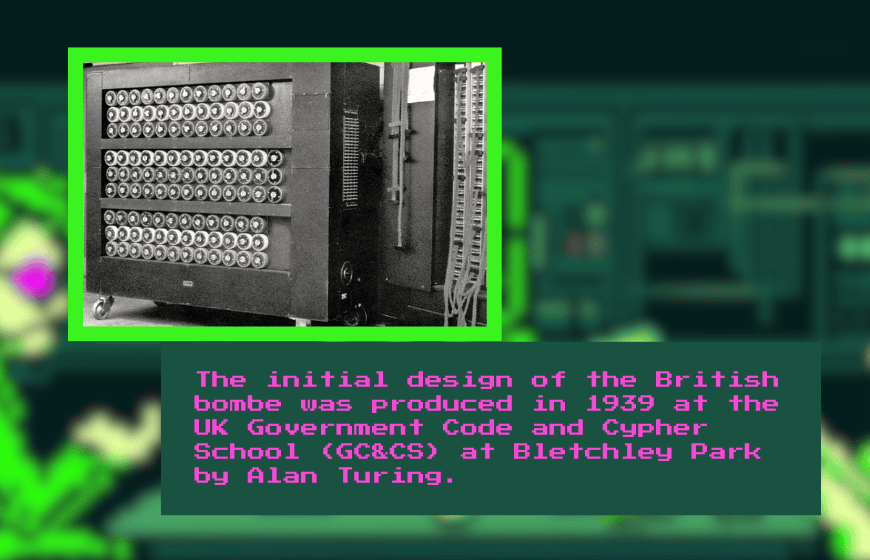
This method transformed wartime cryptography. Instead of checking each message line by line, machines handled the heavy logic. As Turing reportedly said, “Mathematical reasoning may be regarded rather schematically as the exercise of a combination of two facilities: intuition and ingenuity.” The Bombe amplified both by turning logic into mechanical action.
Hut 8 soon decrypted crucial Naval Enigma traffic. For example, decoded messages revealed submarine positions near Iceland and along the English Coast. This intelligence allowed Allied ships to avoid traps that previously caused massive losses.
A Breakthrough That Changed the Battle of the Atlantic
The impact of breaking the Alan Turing Enigma code appeared quickly. Convoy routes changed based on intercepted German instructions. Supplies reached Britain in larger numbers. Analysts at Derby House in Liverpool used decoded messages to coordinate protection across the entire Atlantic corridor.
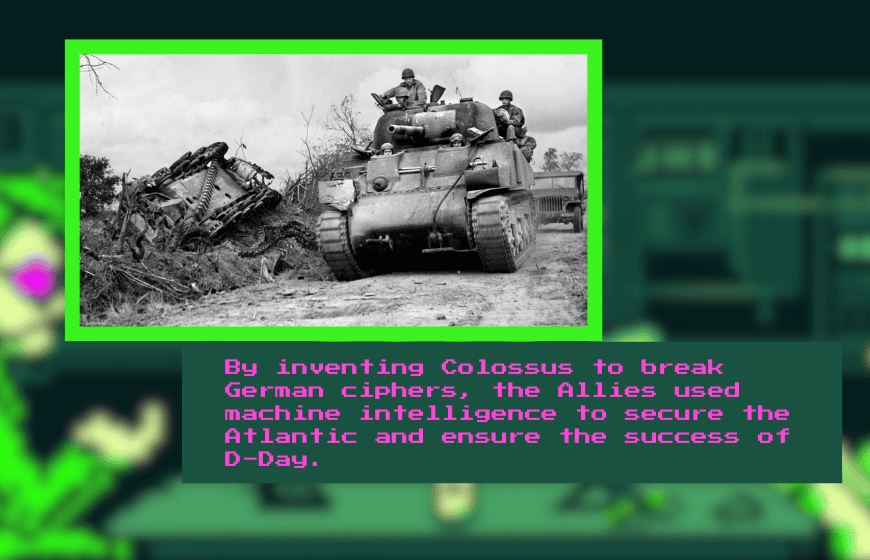
As the war continued, another cipher appeared: the Lorenz machine. It carried high-level German communications between Berlin and field commanders. To solve it, engineers including Tommy Flowers created Colossus, the world’s first programmable electronic computer. Although Colossus was built for a different code, its purpose aligned with Turing’s early idea: machines could extend human intelligence.
This breakthrough also supported major Allied operations. Before the Normandy landings, decrypted messages confirmed that German forces expected an attack near Pas de Calais. Because of this misunderstanding, the Allies moved across the French coast on June 6, 1944 with reduced resistance.
How This Work Led Toward Machine Intelligence
After the war, Turing explored a new question: if machines could imitate parts of reasoning, could they also imitate conversation? This curiosity later shaped the famous Turing test. But the roots of that idea began earlier at Bletchley Park. Breaking codes required machines to perform logic steps faster than humans could. That experience seeded Turing’s belief that intelligence might be mechanical, not mystical.
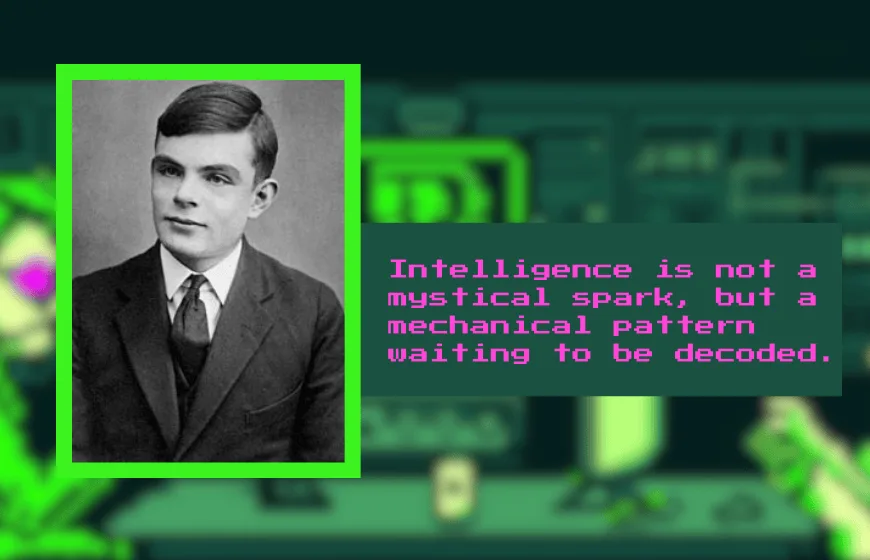
His work also showed how complex patterns hide inside ordinary-looking signals. Just as Naval Enigma messages disguised meaning beneath layers of settings, human conversation hides structure behind everyday words. This connection explains why Turing shifted from cryptography to questions about thinking, learning, and understanding.
Common Misconceptions About Turing’s Role
Some believe Turing acted alone. In reality, thousands worked at Bletchley Park, including linguists, radio operators, mathematicians, and engineers. Others think Enigma was solved instantly after Germany invaded Poland. Instead, progress required years of captured codebooks, intercepted messages, mathematical insight, and new machines.
Another misconception is that Turing’s wartime work was secret simply for security reasons. In truth, much remained classified until the 1970s because of ongoing British intelligence practices. Only then did the world learn how his work accelerated the Allied victory.
Why His Story Still Matters Today
Turing’s achievements link three powerful ideas: coded messages, mechanical logic, and questions about human intelligence. These ideas still guide modern encryption, computer design, and artificial intelligence research. Without the Bombe or Colossus, the history of computing would look very different. Without Turing’s mathematical approach, AI might have developed decades later.
His legacy also reminds us that scientific breakthroughs often depend on people who think differently. Turing worked quietly, avoided public attention, and focused on difficult problems. Yet his contributions shaped not only the war but the digital world we live in.
FAQs
Why was Alan Turing important before artificial intelligence?
Before AI research, Turing played a critical role in breaking German encrypted communications during World War II.
What was Turing’s role at Bletchley Park?
He worked in Hut 8, focusing on decrypting Naval Enigma messages that guided German submarine operations.
What was the Bombe machine?
The Bombe was an electromechanical device designed to test Enigma settings rapidly, accelerating codebreaking efforts.
How did breaking Enigma affect World War II?
Decoded messages helped Allied forces reroute convoys, reduce shipping losses, and support major operations like D-Day.
What was Colossus and how was it connected?
Colossus was the first programmable electronic computer, built to break the Lorenz cipher and extend machine-based cryptanalysis.
Did Alan Turing work alone?
No. Thousands of mathematicians, engineers, and analysts worked at Bletchley Park alongside him.
How did wartime codebreaking influence the Turing test?
Turing’s experience with mechanical logic led him to explore whether machines could imitate reasoning and conversation.