Men Are Opening Up to AI About Mental Health
Many men are opening up to AI about their mental health instead of humans. The trend is growing fast, and it shows up often in online spaces. A recent Reddit thread sparked thousands of reactions because it touched something real. Men want to talk, but they do not always feel safe doing it with other people. AI feels simpler. It feels neutral. It feels private. And for many men, that is enough to start talking.
Although this shift surprises some people, it reflects a deeper issue in how society treats male vulnerability. Men struggle with emotional expression, but the need to talk remains. AI gives them a space where the usual pressure disappears.
Quick Insights
• Men turn to AI because it feels safe, private, and non-judgmental.
• ChatGPT and similar tools help men express emotions they fear sharing with humans.
• AI offers comfort but cannot replace therapy or human empathy.
• Cultural shifts are encouraging men to speak more openly, and AI is a stepping stone.
• Healthy use of AI involves balance: emotional practice with machines and deeper connection with people.
Why Men Struggle to Share Their Feelings
Men grow up hearing messages that encourage toughness and silence. These ideas still shape behavior, even today. When men feel sad, scared, or overwhelmed, they often keep it inside. They fear judgment. They fear being called weak. They fear disappointing others.
Because of this, many men avoid talking about mental health with friends or partners. Even therapy feels intimidating. The fear of being misunderstood can be enough to stop them from reaching out.
AI removes that fear. It allows men to talk without worrying about how they sound. They can be honest without seeing someone’s reaction. This alone makes AI a safe emotional outlet.
Why Men Are Opening Up to AI
The rise of AI chat platforms changed how people talk about personal topics. Men using ChatGPT for emotional support is now common. Several factors make this shift easy to understand.
AI does not judge. It does not interrupt. It does not shame. It simply responds.
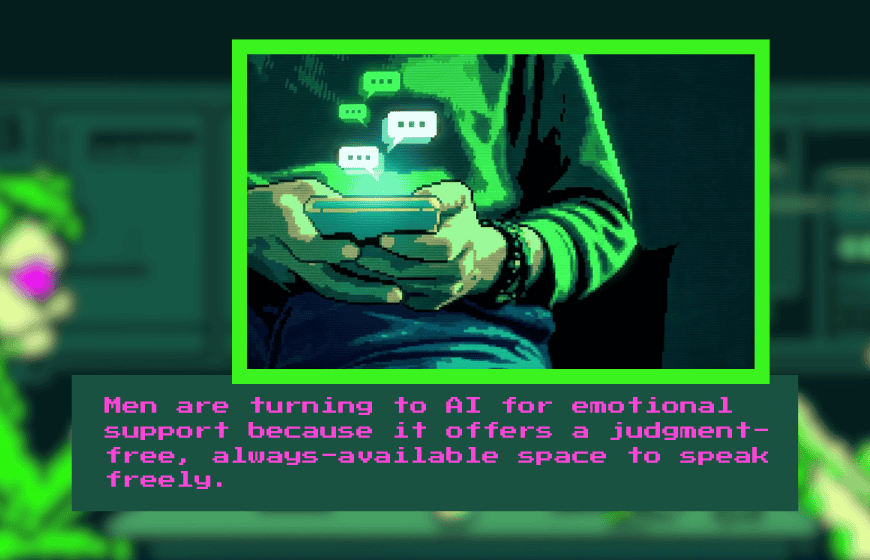
Men say this helps them speak freely. They can share their anger, sadness, or confusion without worrying about how someone else feels. This makes emotional expression feel lighter and safer.
AI is also available at any moment. Late-night anxiety does not wait for office hours. A machine is always accessible. For someone who has never expressed emotions aloud, this becomes a low-pressure starting point.
Some men frame it this way: “I can’t say this to anyone I know. But I can say it to a machine.”
How AI Offers Emotional Support (But Not Therapy)
AI can provide comfort, but it does not replace human care. It mimics empathy through language, not understanding. Still, this can be enough to make someone feel heard during a difficult moment.
Men often ask AI direct emotional questions such as:
“Why do I feel like this?”
“How do I stop overthinking?”
“Can I talk to an AI about my problems?”
Because AI returns clear, structured answers, men feel guided. The tone feels steady and calm. This reduces the pressure that comes with opening up to humans.
However, real therapy works differently. A therapist sees patterns, understands emotion, and builds a relationship with the client. AI cannot replace that depth, but it can support someone who is not ready to talk to a person yet.
Cultural Shifts Behind This Behavior
There is a cultural shift happening. Younger generations speak about mental health more openly. Yet many men still feel behind. When they see others express themselves online, they start feeling permission to do the same.
AI acts as a bridge. It lets men test emotional honesty in a safe space. Once they get used to expressing feelings, some eventually open up to real people too.
This mirrors what happens in gaming or anonymous forums. People speak freely when their identity is hidden. AI creates a similar environment, but with more consistency and less social friction.
What Men Say When They Talk to AI
The Reddit thread showed real examples of what men confess to AI. Many talk about loneliness. Others talk about burnout at work. Some talk about fear of failure. These emotions are common, but many fear saying them aloud to people they know.
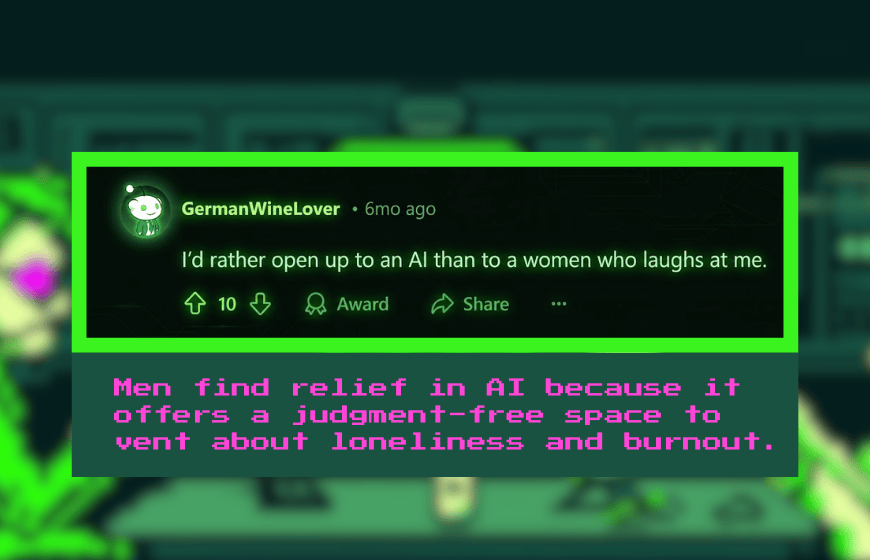
When an AI responds with calm, neutral language, the man feels accepted. That small moment of relief matters. It may not solve the deeper issue, but it provides a release.
One user described it simply: “AI doesn’t judge me. People do.”
The Risks of Relying Only on AI
Although AI provides comfort, it also brings challenges. Emotional support from AI has limits. A model cannot sense tone, body language, or the full context of someone’s life. Misunderstandings can happen. Serious mental health conditions require trained professionals.
There are also privacy issues. Not all platforms protect data equally. Men sharing deep personal thoughts must choose their tools carefully. There is also the risk of avoiding human relationships altogether, which can lead to deeper isolation.
AI works best as a helper, not a replacement.
How Men Can Use AI in a Healthy Way
AI can be a starting point. It can help men practice emotional expression. It can help them identify patterns or name feelings. When used wisely, AI can reduce fear around vulnerability.
But moving toward human connection remains essential. Real relationships provide understanding, trust, and empathy that no machine can replicate. The ideal path blends both: AI for practice and humans for depth.
Men opening up to AI about mental health reflects a real need for safe emotional spaces. AI offers privacy, neutrality, and constant availability. For many men, this is enough to unlock feelings they have held for years. But emotional healing still requires human connection. AI can guide, support, and comfort, but it cannot replace the value of real relationships.
The trend will likely continue as technology evolves. Yet the goal remains the same: helping men feel safe enough to talk, whether to a machine or, eventually, to the people who care about them.
FAQs
Why are men opening up to AI about mental health?
Many men feel safer speaking to AI because it feels private, neutral, and non-judgmental. The absence of social pressure makes it easier to express vulnerable emotions.
Is talking to AI the same as therapy?
No. AI can provide structured responses and emotional validation, but it does not replace licensed therapy or professional mental health care.
Why do men struggle to talk about feelings with other people?
Cultural expectations often encourage toughness and emotional restraint. Fear of judgment or appearing weak prevents many men from opening up.
Can AI actually provide emotional support?
AI can simulate empathy through language and offer coping suggestions. However, it does not truly understand emotions or personal history.
Are there risks to relying on AI for mental health support?
Yes. AI cannot diagnose conditions, may misunderstand context, and cannot provide crisis intervention. Overreliance may also reduce human connection.
Is using AI for emotional expression unhealthy?
It depends on usage. As a starting point for reflection or emotional practice, it can help. Avoiding human relationships entirely can create imbalance.
Will this trend continue?
Yes. As AI becomes more accessible and stigma around mental health decreases, more men may use AI as an initial outlet before seeking human support.