Albania Appoints AI Bot as Minister to Tackle Corruption
We’ve all heard about AI bots by now—they’re the ones powering chat assistants, spotting fraud, and helping make sense of huge amounts of data in seconds. Basically, they’re really good at finding patterns, making quick decisions, and cutting down human error. That’s why more industries are starting to rely on them to work smarter and faster.
So it’s not surprising that people are beginning to ask: what if AI could help fix bigger, messier problems too?
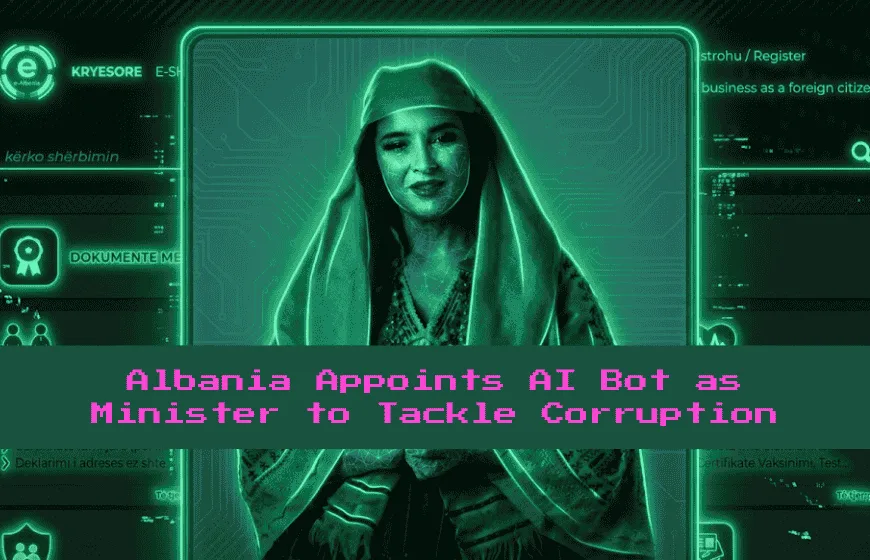
Corruption feels like a problem that never fully goes away. Governments promise reform, yet public trust often remains fragile. Now, however, Albania appoints an AI bot as minister to tackle corruption, and that headline has caught global attention.
This move sounds futuristic, but it aims to solve a very real issue. Albania has struggled with bribery, favoritism, and weak oversight for years. So the government decided to test a new tool: artificial intelligence in a ministerial anti-corruption role.
Let’s break this down in simple terms and explore what it really means.
Quick Insights
- Albania appointed an AI system to support anti-corruption efforts.
- The AI analyzes government data to detect suspicious patterns.
- Technology may improve speed, transparency, and consistency.
- Challenges include accountability, bias in data, and public trust.
- Human oversight remains essential for ethical governance.
Why Corruption Became a National Problem
Corruption has affected Albania’s economy and institutions for decades. According to Transparency International, the country has faced ongoing concerns about public sector transparency and political accountability.
As a result, trust in public institutions has weakened. Businesses worry about fair contracts, while citizens question how tax money gets used. Moreover, Albania’s goal of joining the European Union adds pressure to strengthen governance standards.
Traditional reforms have helped, but progress has been slow. Therefore, the government looked for a different approach.
How an AI Minister Actually Works
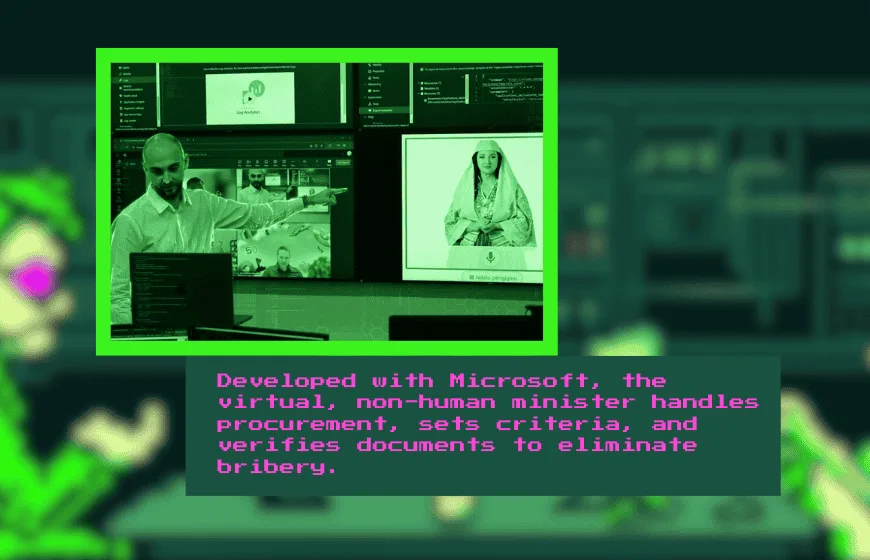
When we hear that Albania appoints AI bot as minister to tackle corruption, we might imagine a robot sitting in parliament. In reality, the system functions as a digital oversight tool within government processes.
The AI analyzes large sets of data. For example, it reviews procurement contracts, public spending records, and financial transactions. It then flags unusual patterns that may signal corruption.
Here is the core idea in simple steps:
- Collect digital government records.
- Run those records through AI algorithms.
- Detect anomalies or suspicious trends.
- Send alerts to human investigators.
Instead of replacing officials, the AI supports them. It processes information faster than any team of auditors could.
Why Technology Might Improve Transparency
Artificial intelligence offers three clear advantages in anti-corruption efforts.
Second, it reduces personal bias. An AI system does not favor political allies or business partners. It applies the same criteria to every case.
Third, it works continuously. Unlike human staff, the system does not depend on office hours. As a result, investigations can begin sooner.
For example, if a construction contract in Tirana shows unusual cost spikes, the AI can flag it immediately. Investigators can then review the case before funds disappear.
What Challenges Could Arise?
Although the idea sounds promising, several challenges remain.
One concern involves accountability. If the AI flags someone incorrectly, who takes responsibility? The government must clearly define oversight roles.
Another issue relates to data quality. AI systems learn from existing records. If past data contains bias or errors, the system may repeat them. Therefore, developers must monitor and update the algorithms regularly.
Public trust also plays a role. Some citizens may worry that machines should not influence political decisions. Transparency about how the system works will be crucial.
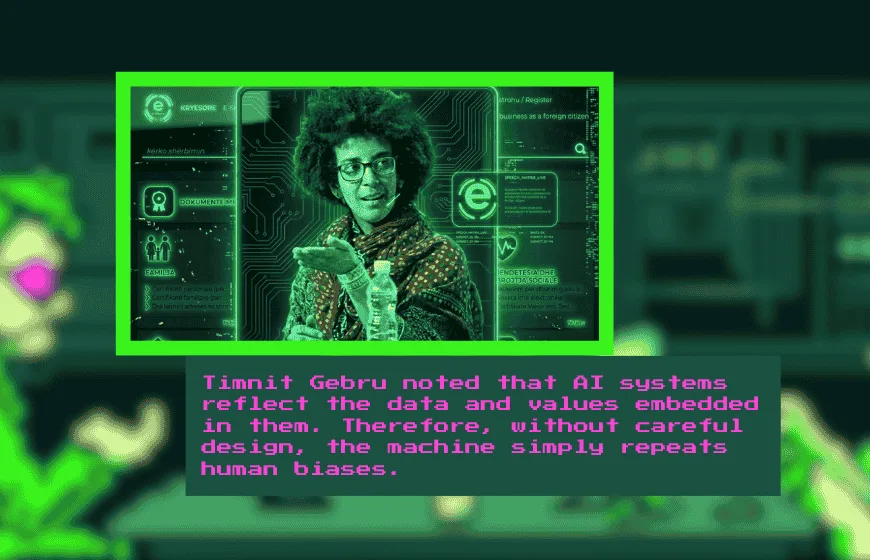
As computer scientist Timnit Gebru once noted that AI systems reflect the data and values embedded in them. That reminder highlights the need for careful design.
Could Other Countries Follow?
Albania’s decision could influence global governance trends. Countries facing similar corruption challenges may study the results closely.
For instance, nations in Eastern Europe or Latin America with high transparency concerns might consider similar AI-driven oversight tools. But, each country would need strong digital infrastructure and legal frameworks.
At the same time, democratic oversight remains essential. AI can detect patterns, but humans must interpret findings and enforce laws. Technology should support institutions, not replace them.
A New Model for Governance?
So, what does this mean for the future?
When Albania appoints AI bot as minister to tackle corruption, it signals a shift toward digital governance. Instead of relying solely on human audits, governments may increasingly use data-driven systems.
However, success depends on balance. Artificial intelligence can enhance transparency, yet human judgment must guide final decisions.
This experiment may not solve corruption overnight. Still, it introduces a new approach that blends technology with accountability.
As the world watches Albania’s experiment unfold, one question remains: Would you trust an AI system to monitor public spending in your country?
FAQs
What is Human or Not?
Human or Not is an online game where players chat anonymously for two minutes and guess whether the other participant is human or AI.
Where can I find Human or Not conversations on Reddit?
Many players share screenshots and stories on the r/humanornot subreddit.
Why are Human or Not chats so funny?
Because humans try too hard to act random while bots try too hard to act normal, leading to chaotic exchanges.
Are bots getting harder to detect in 2026?
Yes. AI models now mimic slang, typos, and emotional tone more convincingly than before.
Can bots use memes like Rickrolls?
Yes. AI systems trained on internet culture can reference or deploy common memes.
Why do humans sometimes sound like bots?
When players try to act unpredictably or “prove” they’re human, they can become overly structured or exaggerated.
Is there a strategy to win Human or Not?
There is no perfect strategy. Players often rely on spotting emotional rhythm, inconsistency, or over-optimization.