Half the Internet Isn’t Human, According to Industry Report
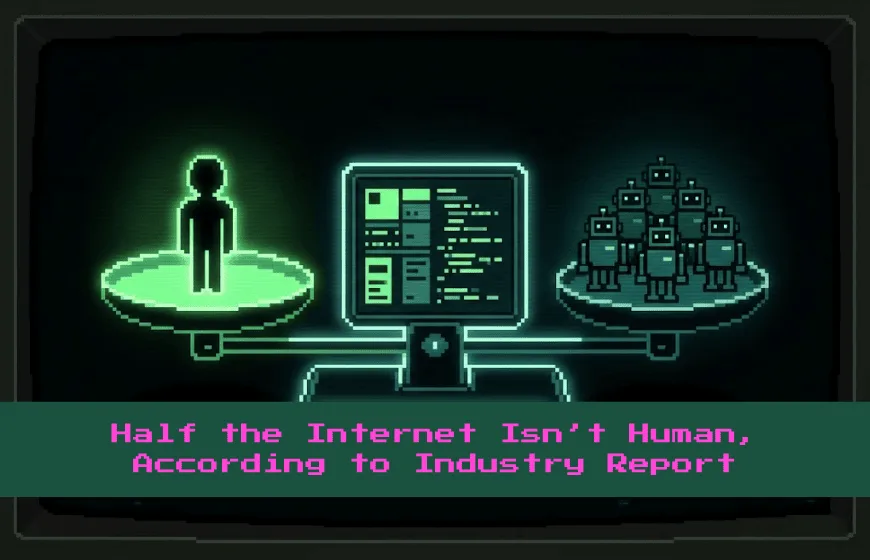
Here is the thing: the internet you use every day is no longer mostly human. Over 40–50% of all traffic is now generated by bots, and not the clunky kind from a decade ago, but increasingly sophisticated AI systems that can talk, recommend, and even persuade.
This shift did not happen overnight. It crept in through customer service chats, recommendation engines, and marketing tools until one day, automation became the default layer beneath everything.
Bots were just those annoying pop-ups that couldn’t understand a simple question, but now they are handling entire workflows without you noticing.
Key Takeaways
- 40–50% of internet traffic is now generated by bots
- Humans excel in emotional and complex interactions
- Bots dominate in speed, scale, and consistency
- AI can boost conversion rates by 10–30% in e-commerce
- Hybrid systems combining bots and humans are the most effective
- Ethical concerns around privacy and transparency are growing
- The future of AI depends as much on governance as it does on technology
Why AI Bots Took Over So Fast
The main reason is simple: efficiency wins.
Businesses wanted 24/7 availability. AI delivered it. Machine learning improved. Costs dropped. Scaling became trivial. One bot can talk to thousands of users at once, while a human burns out after a few hours of back-to-back conversations.
To be honest, the cost factor alone explains a lot. Paying one system to handle global demand is very different from hiring teams across time zones.
Here is what drove the surge:
- Constant demand for instant service
- Better natural language processing
- Lower operational costs
- Easy scaling across markets
This is not just optimization. It is replacement in certain layers of digital work.
Bots vs Humans: Who Actually Performs Better?
Short answer: it depends.
Humans still dominate emotional intelligence. When a customer is frustrated, confused, or dealing with something sensitive, people handle nuance better. Empathy matters. Tone matters. Timing matters.
Bots, on the other hand, excel in speed and consistency. No delays. No mood swings. No mistakes from fatigue.
Let’s break it down.
Engagement: Emotion vs Speed
Humans win when conversations require trust. A person explaining a billing error feels more reassuring than a scripted response.
Bots win when speed matters. Instant replies reduce friction, especially for simple questions like order status or account access.
Anyway, most users do not want deep conversations for routine tasks. They want answers fast.
Conversion Rates: Surprisingly Close
This is where things get interesting.
E-commerce chatbots have been shown to increase conversion rates by 10–30%. That means if 100 people were browsing, bots could convert 10 to 30 more buyers compared to a passive system.
Why does this work? Because bots respond at the exact moment of hesitation. A well-timed suggestion beats a delayed human reply every time.
Efficiency: No Real Competition
Bots handle thousands of interactions simultaneously. Humans cannot.
It is like comparing a calculator to someone doing math by hand. Both can solve problems, but only one scales without slowing down.
Real-World Examples You Already Experience
This is not theoretical. It is already everywhere.
1. Customer Service Automation in Banking
Major banks have implemented AI chatbots to handle routine inquiries such as balance checks and transaction histories. These bots have reduced customer wait times by up to 80%, allowing human agents to focus on complex issues.
2. E-commerce Personalization
Retail companies use AI bots to provide personalized shopping experiences. These systems analyze browsing behavior and purchase history to suggest products, increasing average order value.
3. Marketing Automation Platforms
Digital marketing firms use AI-driven tools to automate email campaigns, segment audiences, and optimize ad performance. This has led to measurable improvements in ROI while reducing manual workload.
These examples illustrate that the impact of AI on the internet is not theoretical—it is already reshaping industries.
The Ethical Side: Where Things Get Complicated
Here is where the conversation shifts.
AI depends on data. A lot of it. And that raises questions.
Privacy and Data Use
Users often do not know how their data is collected or used. The system works quietly in the background, analyzing behavior to improve performance.
This creates a trade-off: convenience versus control.
Transparency Issues
Many people do not even realize when they are talking to a bot. This becomes a problem in areas like healthcare or finance, where clarity matters.
Such a gap in awareness can erode trust over time.
Regulation Is Catching Up
Governments are starting to introduce rules around:
- Accountability
- Bias reduction
- Data protection
Still, regulation tends to lag behind innovation. Always has.
Also Read: AI Bot Swarms Quietly Shape Public Opinion
Do People Actually Trust AI Bots?
The answer is mixed.
Users are comfortable with bots for simple tasks. Checking an order? Fine. Resetting a password? No problem.
Trust drops when decisions carry weight. Financial advice. Medical guidance. Legal issues. People want a human involved.
This leads to a hybrid model:
- Bots handle the first interaction
- Humans take over when things get complex
It is not about preference. It is about practicality.
What Happens Next?
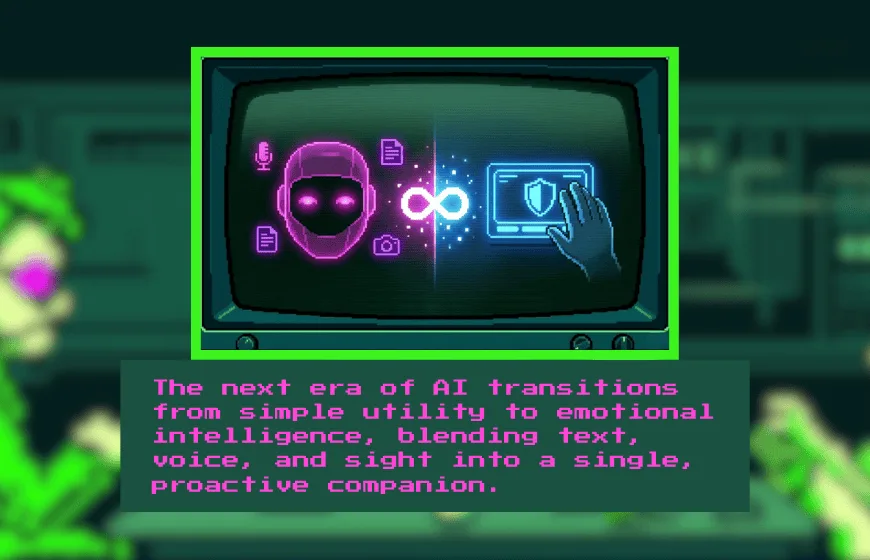
AI is not slowing down.
Future systems will likely:
- Sound more human in conversation
- Combine text, voice, and images seamlessly
- Predict user needs before they are stated
But challenges remain.
Misinformation generated by AI is a growing concern. Job displacement is another. Ethical alignment across different countries adds another layer of complexity.
These visuals help clarify what numbers alone cannot: the scale of change is massive.
What This Means for Businesses
For companies, this is both an opportunity and a risk.
Opportunities include:
- Lower costs through automation
- Better customer experiences via personalization
- Scalable operations
But there are trade-offs:
- Maintaining authenticity
- Handling data responsibly
- Keeping a human touch where it matters
Businesses that balance these factors tend to perform better long term.
The internet is no longer a human-dominated space. AI bots are now central players, shaping how information flows and how interactions happen.
This is not a competition with a single winner. Humans and bots serve different roles. The most effective systems combine both.
The real question is no longer whether AI belongs online. It already does. The more important question is how we manage it.
FAQs
How much of the internet traffic is generated by bots?
Estimates suggest that around 40–50% of internet traffic comes from bots, including both helpful and malicious automation.
What do AI bots do online?
AI bots handle tasks such as customer service, recommendations, marketing automation, and data processing at scale.
Are bots replacing humans on the internet?
Bots are replacing certain repetitive tasks, but humans still dominate areas requiring emotion, judgment, and complex decisions.
Can you tell if you are talking to a bot online?
Not always. Modern AI bots can mimic human conversation closely, making detection increasingly difficult.
Why are AI bots increasing so quickly?
Lower costs, scalability, and improved machine learning have made bots more efficient than humans for many digital tasks.