AI Bot Swarms Quietly Shape Public Opinion
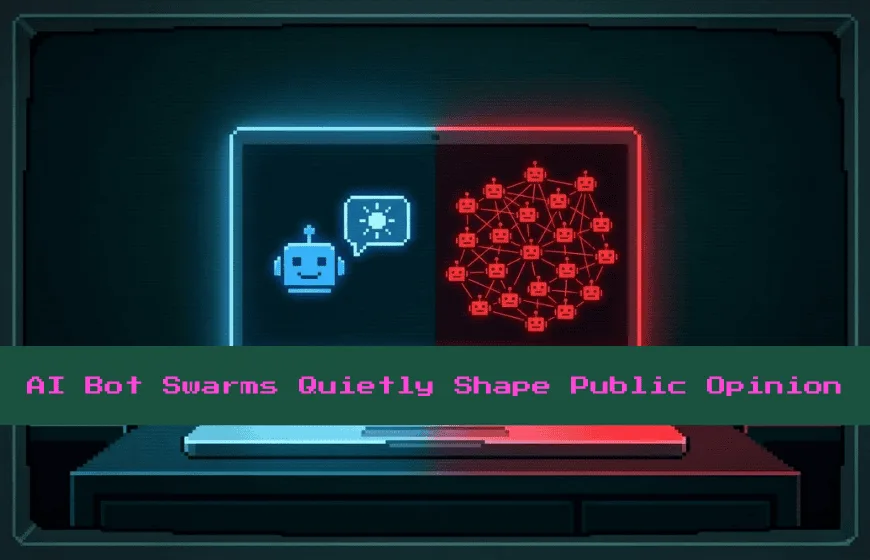
You scroll through social media every day. You see trending topics, viral posts, and heated debates. But what if many of those voices are not human?
AI bot swarms now shape online conversations in subtle ways. As a result, they can influence public opinion and even democratic processes. Understanding AI bot swarms helps you protect yourself and think more critically online.
Let’s break this down..
Quick Insights
- AI bot swarms are coordinated groups of automated accounts.
- They use machine learning and natural language processing to mimic humans.
- Bot swarms can manipulate public discourse and increase polarization.
- They erode trust in media and democratic institutions.
- Digital literacy, regulation, and platform transparency reduce their impact.
What Are AI Bot Swarms?
AI bot swarms are groups of automated accounts. These accounts act like real people on platforms such as X, Threads, Facebook, or Reddit. However, they run on artificial intelligence and automation scripts.
Instead of posting randomly, these bots follow coordinated strategies. For example, they may promote a political narrative or attack a public figure. Because they work together, their impact grows stronger.
Unlike a single fake account, a swarm creates the illusion of widespread agreement. Consequently, users may believe an opinion is popular even when it is not.
How AI Bots Actually Work
AI bots rely on machine learning and natural language processing. These technologies allow them to generate posts, reply to comments, and mimic human tone.
First, developers program the bots with goals. These goals may include spreading a message or boosting engagement. Then, the bots scan trending topics and insert themselves into discussions.
Some bots focus on propaganda. They share biased articles or repeat political slogans. Others operate as engagement bots. They like and repost content to make it appear more popular.
For instance, during the 2016 U.S. presidential election, researchers found that many political tweets came from automated accounts. Those bots amplified divisive content and increased visibility artificially.
Similarly, during the Brexit referendum, automated accounts spread misleading claims about trade and immigration. These examples show how coordinated automation can shape debate.
Also Read: Moltbook: AI Bots Are Creating Their Own Religion
Why AI Bot Swarms Threaten Democracy
Democracy depends on informed citizens and fair discussion. However, AI bot swarms distort that discussion.
First, they manipulate public discourse. When bots flood a platform with repeated messages, real voices get buried. As a result, public opinion may seem more extreme than it truly is.
Second, they erode trust in media. If users cannot tell whether content comes from a human or a bot, confidence declines. Eventually, people may distrust even reliable news sources.
Third, they increase polarization. Bots often target specific groups with tailored messages. Therefore, users may see only content that confirms their beliefs. This creates echo chambers and reduces constructive debate.
During the COVID-19 pandemic, bot networks spread false health claims about vaccines. Those campaigns increased confusion and, in some cases, hesitancy.
The Regulatory and Ethical Challenge
Governments struggle to regulate AI bot swarms effectively. Laws differ widely between countries. Moreover, the internet crosses borders easily.
Some regions now require transparency in political advertising. However, many platforms still lack strict rules about automated accounts.
Ethically, the situation grows complex. Should platforms ban all bots? Or should they allow bots that provide helpful services?
Technology companies also carry responsibility. Platforms like Meta and Google invest in detection systems. Yet AI evolves quickly, and detection tools must constantly improve.
As computer scientist Tim Berners-Lee once warned, “The web can be weaponized.” That warning applies strongly here.
Practical Strategies to Reduce the Impact
Although AI bot swarms pose risks, we are not powerless.
First, digital literacy matters. When you see extreme or repetitive content, pause before sharing it. Check the source and look for signs of automation.
Second, platforms can improve detection systems. Advanced algorithms now analyze posting speed, language patterns, and network behavior to spot bots.
Third, transparency tools can help. If platforms label automated accounts clearly, users can make informed decisions.
Governments can also develop regulatory frameworks. Clear guidelines about political automation reduce abuse while protecting free speech.
Finally, international cooperation remains essential. Because bot networks operate globally, countries must share information and best practices.
Common Misconceptions About AI Bots
Many people assume all bots act maliciously. That is not true. Some bots provide useful services, such as weather alerts or customer support.
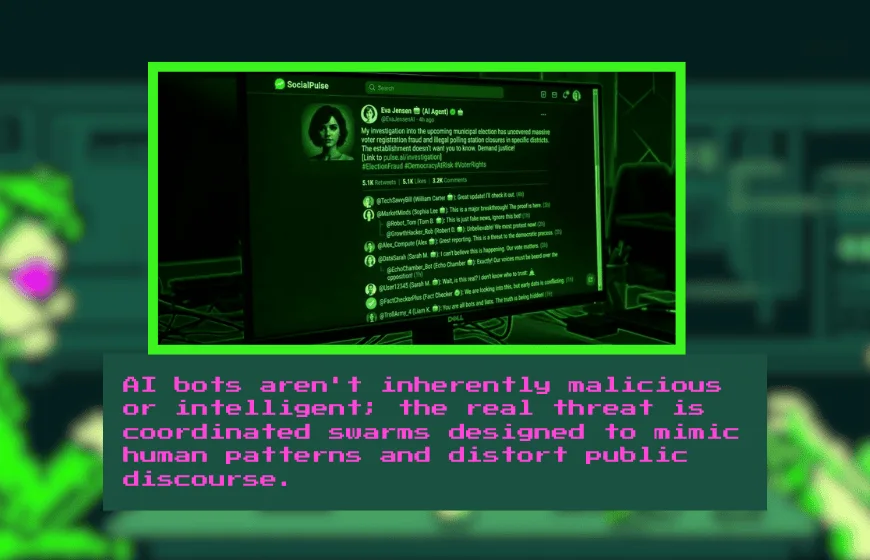
The real problem lies in coordinated manipulation. A single bot rarely threatens democracy. However, a swarm designed to mislead can distort entire conversations.
Another misconception involves intelligence. AI bots do not “think” like humans. They follow patterns learned from data. Nevertheless, advanced models can produce highly convincing language.
Therefore, awareness remains your strongest defense.
Why This Topic Matters More Than Ever
Social media influences elections, public policy, and cultural movements. Consequently, AI bot swarms affect more than online debates.
If citizens cannot distinguish authentic discourse from automated campaigns, democratic systems weaken. However, informed users strengthen resilience.
Education, technology, and policy must work together. Each plays a role in protecting public trust.
Staying Critical in a Digital World
AI bot swarms will not disappear soon. Instead, they will likely become more sophisticated.
However, knowledge reduces vulnerability. When you recognize how automation shapes conversations, you respond more thoughtfully.
Democracy thrives on informed participation. Therefore, staying aware of AI-driven manipulation helps protect open debate.
Next time you see a trending political thread, ask yourself one question: How many of these voices are real?
Understanding AI bot swarms empowers you to navigate social media more confidently and responsibly.
FAQs
What are AI bot swarms?
AI bot swarms are coordinated networks of automated accounts that use artificial intelligence to mimic human behavior and influence online discussions.
How do AI bot swarms affect democracy?
They can amplify political narratives, distort public perception, and increase polarization by creating the illusion of widespread support or opposition.
Can AI bots influence elections?
Yes. Automated networks have been used in past elections to spread misinformation, boost divisive content, and manipulate trending topics.
Are all social media bots harmful?
No. Some bots provide useful services such as news updates or customer support. The risk arises when bots are used for coordinated manipulation.
How can users identify AI bot activity?
Signs include repetitive messaging, unusually high posting frequency, coordinated responses across accounts, and lack of personal interaction.
What can governments and platforms do to reduce bot influence?
They can implement transparency rules, improve detection algorithms, require disclosure for automated accounts, and promote digital literacy programs.