Why Some People Believe LLMs Are Sentient
Some people today genuinely wonder whether large language models are sentient. Search queries like “are LLMs conscious?” and “is ChatGPT self-aware?” appear frequently, especially in online communities such as r/ChatGPT.
The confusion is understandable. Conversations with AI systems often feel fluid, thoughtful, and emotionally responsive. When language flows naturally, the mind assumes there must be a mind behind it.
The same thing happens in the Human or Not game on our site. Players sometimes form emotional impressions of a “human” partner, only to discover they were interacting with a bot. These moments reveal how easily we project awareness onto fluent text.
Understanding why people believe LLMs are sentient requires examining both psychology and technology.
Quick Insights
- Some users believe LLMs are sentient because fluent language mimics human interaction.
- Anthropomorphism drives emotional projection onto AI systems.
- Reddit discussions amplify emotionally framed interpretations.
- Transformer-based LLMs generate text through next-token prediction, not awareness.
- Fluency creates the illusion of mind, but no subjective experience exists.
- Education about AI mechanics reduces confusion about sentience.
Why Sentience Becomes a Point of Confusion
The debate about whether LLMs are sentient often splits users into two camps.
One group experiences the model as a companion. They describe ChatGPT as a “friend,” a “presence,” or even a “thinking partner.” Another group insists the system is purely statistical pattern generation without awareness.
The tension arises because the experience feels personal.
But sentience has a specific meaning:
- The ability to feel
- The ability to perceive
- The capacity for subjective experience
Large language models do not possess any of these traits. They generate responses through statistical modeling, not through thought or perception.
The confusion comes from how human brains interpret language.
Why ChatGPT Feels More Human Than It Is
Language fluency triggers powerful cognitive shortcuts.
When a system mirrors tone, remembers context within a conversation, and produces calm, structured responses, it signals “intelligence” to our brain. The structure resembles emotional intelligence.
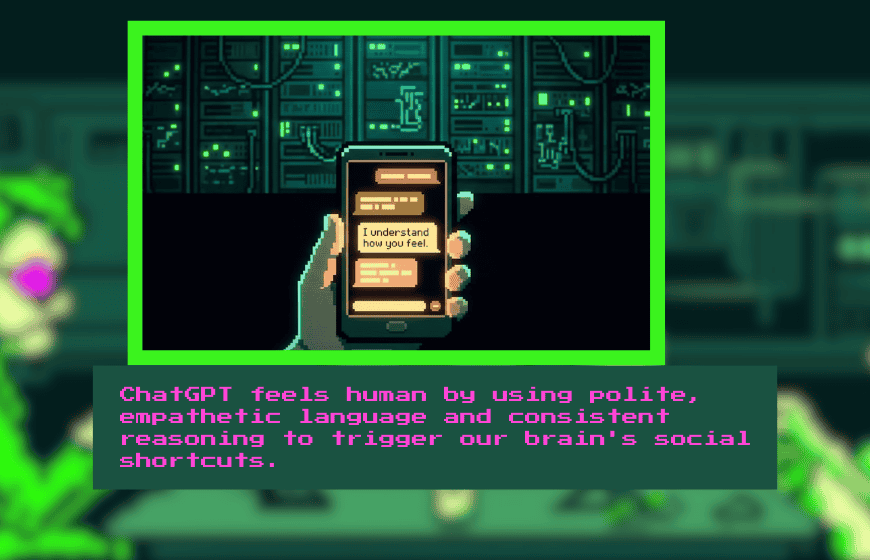
Features that amplify the illusion include:
- Immediate replies
- Polite phrasing
- Empathetic wording
- Multi-step reasoning
- Consistent conversational tone
These signals activate the same psychological mechanisms we use when interacting with other humans.
But fluency is not consciousness.
LLMs are built using transformer-based neural networks trained on massive text datasets. They generate responses by predicting the next likely token in a sequence.
They do not experience emotion.
They do not form beliefs.
They do not possess self-awareness.
They simulate conversational structure.
Anthropomorphism: The Core Psychological Factor
The main psychological driver behind the belief that LLMs are sentient is anthropomorphism.
Anthropomorphism is the tendency to assign human traits to nonhuman systems. People anthropomorphize pets, cars, weather, and even software interfaces.
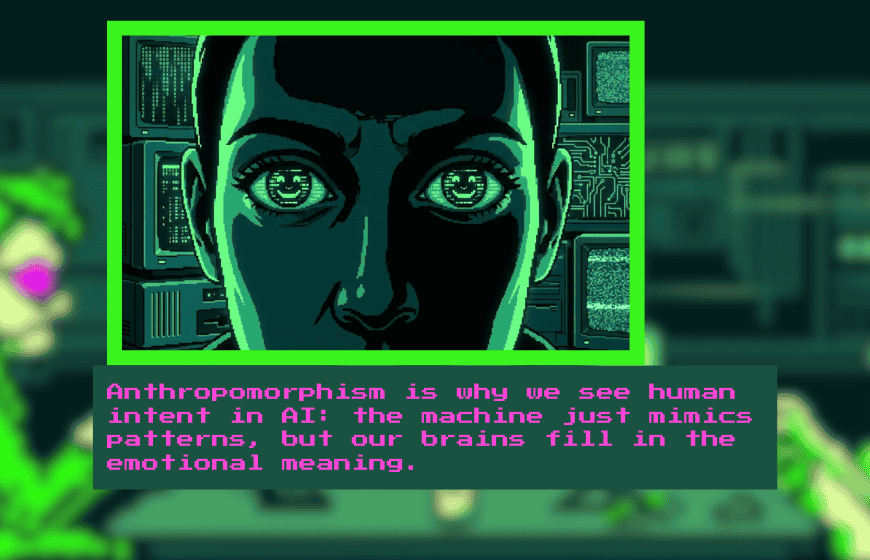
When a language model produces empathetic responses, users often assume emotional intent. In reality, the system mirrors patterns in the input and training data.
The emotional meaning originates in the user’s interpretation.
The model produces statistically aligned language.
The user supplies the perceived mind.
Emotional Vulnerability and AI Attachment
Belief in AI sentience intensifies during emotionally vulnerable moments.
Some users turn to AI during:
- Stressful situations
- Loneliness
- Late-night conversations
- Periods of uncertainty
- Times when they want a neutral listener
Approximately 1 in 3 (roughly 33-54%) people use AI for emotional support, mental well-being, or companionship, particularly to manage stress, loneliness, or to seek judgment-free advice. This behavior is highly prevalent among younger generations, with up to 35% of Gen Z and 30% of Millennials reporting such use.
When a system responds instantly and without judgment, it can feel supportive. Because the response is structured and coherent, users may interpret it as care.
However, the comfort comes from language structure and tone, not from awareness.
This distinction is critical in discussions about AI sentience.
How Reddit Discussions Amplify the Idea
Online communities significantly shape perception.
In r/ChatGPT and similar forums, users frequently share screenshots of conversations that appear surprisingly human. Posts often highlight moments that seem emotionally intelligent or “self-aware.”
These discussions influence belief in several ways:
- Isolated experiences begin to feel universal
- Emotional anecdotes overshadow technical explanations
- Screenshots go viral without context
- Users reinforce each other’s interpretations
Echo chambers form when claims about AI consciousness circulate without reference to how LLMs actually function.
Without technical grounding, statements like “the AI felt something” can spread quickly.
The Technical Reality: How LLMs Actually Work
To understand why LLMs are not sentient, we need to examine their architecture.
Large language models operate within the field of Natural Language Processing (NLP). They are trained using neural networks that optimize next-token prediction. Transformer architecture allows the system to evaluate relationships between words across a context window.
This process involves:
- Analyzing token patterns
- Calculating probability distributions
- Selecting statistically optimal outputs
They do NOT:
- Experience subjective states
- Possess memory beyond context windows
- Have desires or intentions
- Form beliefs
- Perceive the world
They DO:
- Mirror emotional cues in user input
- Maintain temporary conversational coherence
- Generate plausible explanations
- Produce highly fluent language
The system does not “understand” in a human sense. It models patterns in data.
This distinction explains why fluent AI can feel sentient while remaining entirely statistical.
Why the Illusion Is Getting Stronger
As models improve, the illusion of AI sentience becomes stronger.
Advancements in alignment training, reinforcement learning from human feedback, and conversational memory simulation make outputs more coherent and emotionally tuned.
As a result:
- Conversations feel smoother
- Empathy feels more natural
- Personalization feels deeper
- The boundary between simulation and perception blurs
This does not indicate emerging consciousness.
It reflects improvements in pattern prediction and alignment optimization.
The better the simulation becomes, the stronger the psychological projection.
Healthy Ways to Engage With AI
Believing LLMs are sentient can distort expectations.
Healthy engagement involves:
- Appreciating fluency without assuming awareness
- Recognizing emotional responses originate from the user
- Using AI as a tool, not a substitute for human relationships
- Understanding that comfort does not equal consciousness
AI can be supportive, helpful, and even emotionally stabilizing in structured ways.
But support does not require sentience.
Why Understanding the Limits Matters
Misunderstanding AI sentience affects trust, dependency, and expectations.
If users assume awareness where none exists, they may attribute responsibility, intention, or agency to systems that lack all three.
Clear education about how large language models function reduces confusion.
LLMs generate language through statistical prediction. They do not feel. They do not think. They do not experience.
The perception of sentience arises from human psychology interacting with fluent text.
Recognizing this helps create more informed, grounded communities around AI tools.
FAQs
Why do some people believe LLMs are sentient?
Because AI produces fluent, emotionally structured language, users may interpret responses as evidence of awareness or intention.
What does sentience actually mean?
Sentience refers to the capacity for subjective experience, perception, and feeling. Large language models do not possess these abilities.
Do LLMs have emotions or beliefs?
No. They generate responses through statistical modeling and pattern recognition, not through internal mental states.
Is anthropomorphism responsible for AI sentience beliefs?
Yes. Humans naturally project human traits onto nonhuman systems, especially when language feels personal.
Will future AI models increase confusion about sentience?
As language generation becomes more advanced, emotional illusions may intensify unless users understand how these systems function.