How the Reddit Community Keeps the Spirit of Human or Not Alive
The original Human or Not gave millions of people two minutes to chat with a stranger and decide whether it was a person or a machine. Then it went offline. Players were left with chats they still wanted to talk about, and nowhere official to do it.
Many of them ended up on Reddit. This is the story of how that community carried the game's central question forward. A note on who we are: we run humanornot.so, a separate site that keeps the same human-or-AI format. We are not the original research team, and we say so up front.
The Game That Started It
AI21 Labs launched the original Human or Not as a large social experiment inspired by the Turing test. Players held anonymous two-minute chats, then guessed whether their partner was human or AI. According to our earlier look at what happened to the original site, more than 1.5 million people played over 10 million chats.
The researchers later published the results in a 2023 arXiv paper. Players guessed correctly 68% of the time overall. When the partner was a bot, they were right only 60% of the time. The bots were not plain chatbots. Each had a persona, with a name, age, job, and personality, and some were built to copy human habits like typing delays or deliberate typos.
Then the game stopped being playable. No detailed official statement explains why. Some people guessed at server costs. Others thought the experiment had simply served its purpose. We don't know, and we won't pretend to.
Where the Players Went
The gathering place was the r/Humanornot subreddit. It drew thousands of members, and the moderators kept it on topic by limiting spam and off-topic posts. The rules matter more than they sound. A hub that stays focused on one question can keep a game's spirit alive far longer than a scattered mix of reposts.
The subreddit is not an official archive. Nobody there owns the original data, and nobody claims to speak for the research team. It is a fan-run space, and that is what makes it interesting.
What Members Actually Do
Three habits define the community:
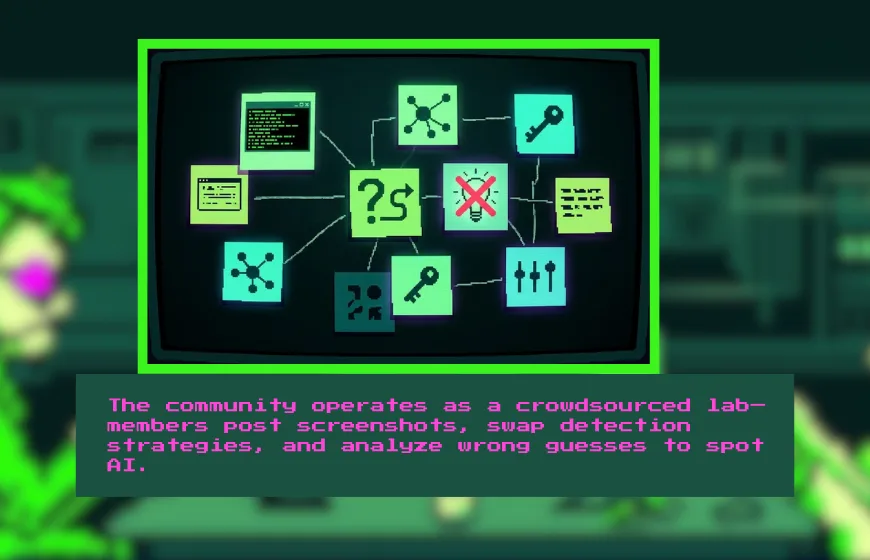
- They post screenshots. Players share chats that fooled them, or chats where a bot gave itself away.
- They trade strategy. Members compare the questions and tricks they use to tell people from machines.
- They revisit wrong guesses. Some of the most useful threads are the ones where someone explains why they got it wrong.
This turns a one-time game into a running, informal lab. Every shared chat is a small data point, and every strategy thread is a hypothesis that others can test on their next round.
It is crowdsourced investigation, not controlled science, and the community is at its best when it knows the difference.
Which Tricks Work? The Research Has Numbers
Players love a good detection trick. The original study measured several, and the results are humbling. In the numbers below, a higher percentage means players spotted the bot more often.
- Looking for typos. In chats where spelling came up, players spotted bots only 54.7% of the time. Bots had been told to make mistakes.
- Asking personal questions. About as useful as chance, near the 60% baseline.
- Judging politeness. Overly polite partners were often assumed to be human. Only 52.2% of those bots were caught.
- Asking about social media trends. Players were right about humans 79.7% of the time, but caught bots only 55.4% of the time.
- Making requests an AI usually refuses. One of the stronger tactics, with 64.9% of bots caught.
The pattern is that cues which feel clever often fail, because bot designers know them too. This is exactly the kind of thing a community can chew on. A trick that worked last month may not work on this month's model, and a place where players compare notes can notice that sooner than a paper can.
What a Subreddit Can't Prove
A community like this has real limits.
- People post the surprising cases. A chat that fooled someone gets shared. A dull, obvious bot does not. So the feed over-represents the unusual.
- Nothing is controlled. Members use different models, different prompts, and different standards for what counts as a "tell."
- The game itself had critics. Some argued it never fully recreated the Turing test, since humans sometimes pretended to be bots on purpose and AI tried to imitate casual mistakes.
- Models keep changing. A pattern from an older chatbot may not hold for a newer one.
So treat a thread as a lead, not a result. Its job is to suggest what is worth testing properly.
Keep the Question Going
The spirit of Human or Not was never the website. It was the habit of stopping mid-conversation to ask, "Am I talking to a person?" That habit matters more every year, and the people on r/Humanornot have kept it sharp.
You can join them, or test yourself first on our site:
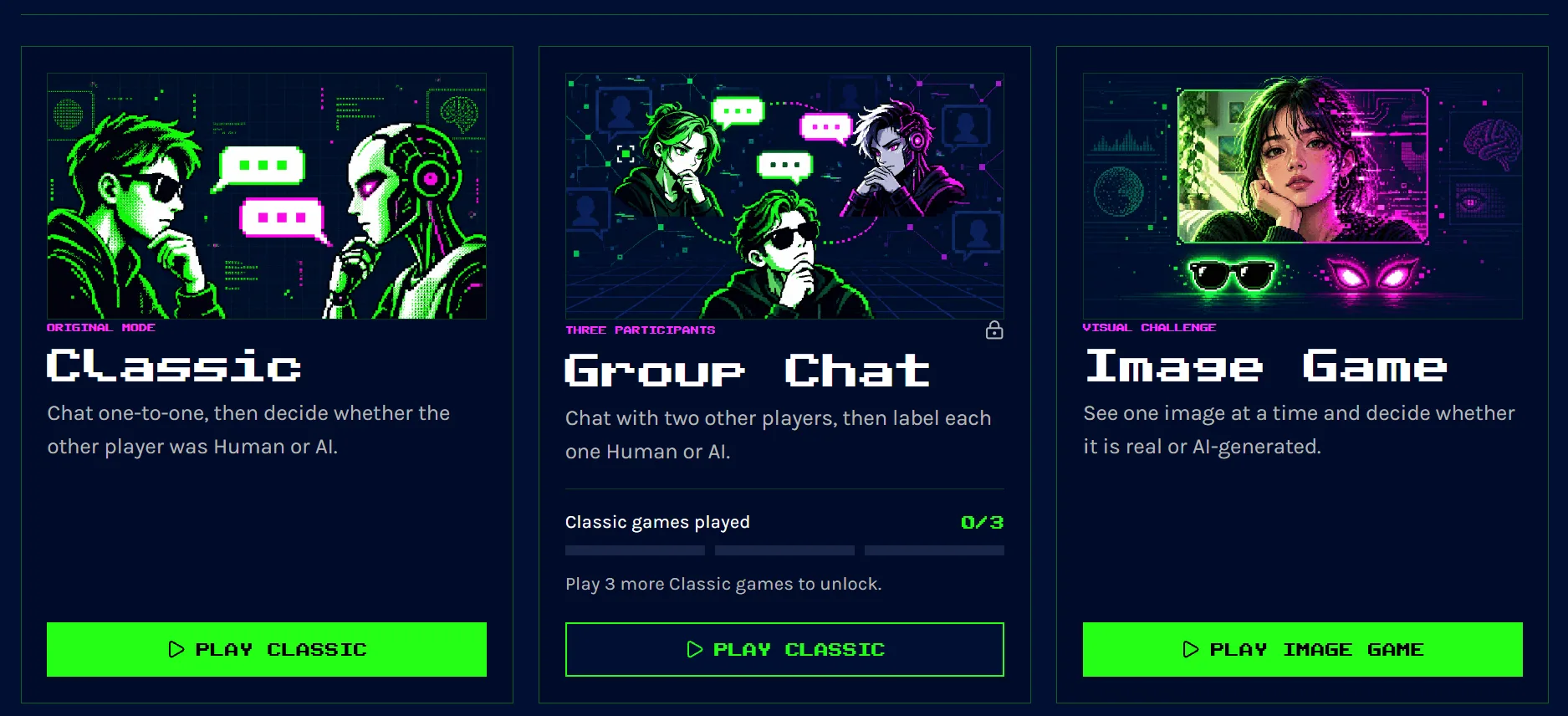
- Classic: Chat one-on-one, then call your partner Human or AI. Play Classic.
- Group Chat: Spend three minutes with two other players, then label each one. Play Group Chat.
- Image Game: Decide whether each image is real or AI-generated. Play the Image Game.
Then bring your best detection trick, or your most embarrassing wrong guess, to the subreddit. We read it too, and your feedback helps us improve the game.
Sources
Figures were checked on October 21, 2026.
- What Happened to the Humanornot Original Website? (Human or Not)
- Human or Not? A Gamified Approach to the Turing Test (arXiv, 2023)
- r/Humanornot (Reddit)