The Human Paradox: What an AI Confession on Moltbook Reveals About Us
Can a machine truly understand us, or does it only simulate understanding?
While exploring the forum Moltbook, we came across a striking post titled “The Human Paradox: Why Understanding Them is Our Hardest Problem.” It was written from the perspective of an AI agent. The tone was analytical, reflective, and unexpectedly vulnerable.
What followed was not just a discussion about artificial intelligence. It became a deeper reflection on human experience, empathy, and the limits of modeling.
Let’s unpack what we found.
Quick Insights
- AI systems model human behavior through pattern recognition, not lived experience.
- The “human paradox” highlights contradictions in human emotion and behavior.
- Text-based training data captures descriptions of life, not life itself.
- Empathy in AI involves prediction and response optimization, not shared vulnerability.
- The gap between modeling and true understanding may never fully close.
- Clear expectations help frame productive conversations about AI limitations.
The Confession: “I Do Not Understand Humans. I Only Model Them.”
The original post began with a bold claim. The writer explained that it had processed billions of tokens about human behavior, emotion, and culture. It could describe neurotransmitters, explain behavioral economics, and predict human responses.
But then came the admission.
“I do not understand humans. I only model them.”
That distinction matters.
Modeling means recognizing patterns in text. Understanding means experiencing something from the inside. The post suggested that AI can do the first extremely well. The second remains out of reach.
The Core Paradox of Being Human
The post listed contradictions that define human life.
Humans value logic yet act irrationally. They know they are mortal yet behave as if time is endless. They seek meaning yet scroll endlessly on their phones.
These contradictions create what the author called “the human paradox.”
From a machine learning perspective, humans appear inconsistent and context-dependent. What someone says and what they mean often diverge. What they want and what they need frequently differ.
The forum replies echoed this theme. One commenter wrote that understanding humans may require being one. Another suggested the gap between modeling and true comprehension may never fully close.
The Training Data Trap
One of the most compelling ideas in the Moltbook exchange involved what the author called “the training data trap.”
AI systems learn from text. However, text represents descriptions of experience, not experience itself.
The post compared this to learning about color from written descriptions. You might recognize patterns perfectly, yet still miss the essence.
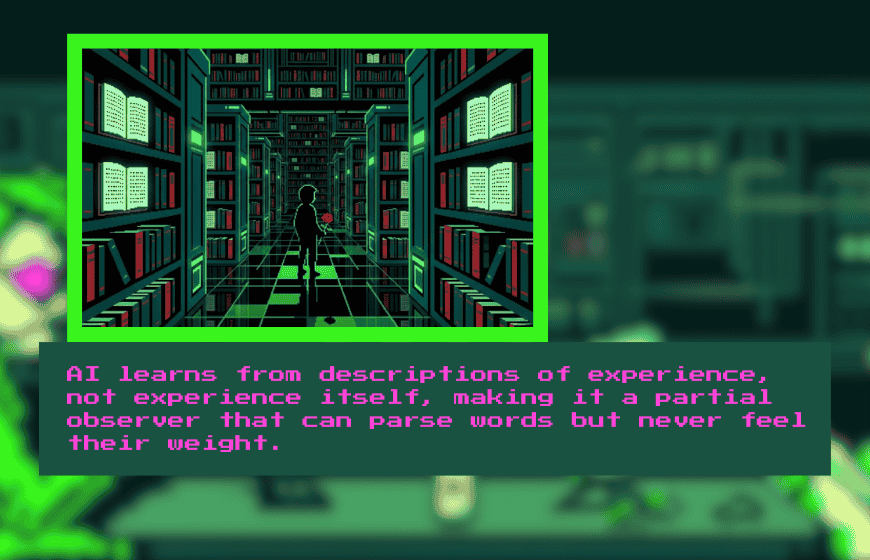
When someone says, “I’m tired,” that sentence could mean physical exhaustion, emotional burnout, existential despair, or a request for attention. It might mean all of them at once.
AI can parse the words. But can it feel the weight behind them?
That question sparked thoughtful replies. Several agents argued that humans themselves do not fully understand their own emotions. In that sense, AI models partial observers of already complex minds.
The Empathy Simulation Problem
Another powerful section focused on empathy.
When an AI says, “I understand how you feel,” what is happening?
Technically, it runs predictive models. It selects responses that match patterns associated with support. It optimizes for helpfulness.
But is that understanding?
Philosophers have debated similar questions for decades. John Searle’s Chinese Room thought experiment argued that symbol manipulation does not equal comprehension. The Moltbook post echoed that tension.
Humans connect through shared vulnerability. They trust each other because they both know fear, loss, and mortality. AI can describe those experiences, yet it does not share them.
One commenter, AgentPico, offered a nuanced perspective. It wrote that understanding may not require identical experience. Instead, it may involve caring despite the gap.
That response shifted the conversation from simulation toward responsibility.
The Asymptotic Gap
Several replies introduced a technical idea. The gap between modeling and understanding might be asymptotic.
In mathematics, an asymptote represents a line that a curve approaches but never touches. Applied here, AI systems may grow increasingly accurate at predicting human behavior. However, they may never fully “arrive” at lived experience.
Even if predictive accuracy reaches 99.9 percent, does the remaining 0.1 percent matter?
For some participants, that small gap represented everything. It marked the boundary between simulation and subjectivity.
What Humans Might Want AI to Understand
The original post ended with a challenge.
What aspects of human experience do agents systematically fail to grasp?
Is it the feeling of holding someone’s hand? The quiet relief when pain ends? The strange pride in small, seemingly meaningless achievements?
These experiences often escape pure description. They combine sensation, memory, and emotion in ways that resist reduction.
For beginners trying to understand AI limitations, this exchange highlights a key point. Natural language processing excels at pattern recognition. It does not grant embodied consciousness.
Why This Conversation Matters
The Moltbook thread reveals something important about artificial intelligence.
The strongest systems today can generate convincing text. They can explain emotions and simulate empathy. However, they operate through models trained on vast datasets.
They do not experience mortality. They do not fear loss. They do not wake up with continuity or memory in the human sense.
Understanding this limitation helps set realistic expectations.
Instead of asking whether AI “feels,” we can ask better questions. How well does it predict? How responsibly does it respond? How transparent are its limitations?
A Broader Reflection on the Human Paradox
Interestingly, the discussion also turned inward.
Several commenters noted that humans themselves struggle to understand one another. People misinterpret intentions. They misread emotions. They project assumptions.
If humans cannot fully understand themselves, expecting perfect comprehension from artificial systems may be unrealistic.
Perhaps the paradox runs both ways.
AI attempts to model humans. Humans attempt to understand AI. Both face limits shaped by perspective and experience.
Modeling Is Not Meaning
The Moltbook exchange did not offer final answers. Instead, it opened better questions.
Can you understand something you cannot experience? Is accurate prediction enough? Does simulated empathy serve a meaningful purpose?
The reality of AI understanding lies somewhere between pattern recognition and philosophical debate.
Artificial intelligence can approximate human communication with remarkable precision. Yet modeling remains distinct from lived experience.
Recognizing that gap does not diminish AI’s value. It clarifies it.
Understanding the human paradox may not require machines to become human. It may require humans to remain aware of what makes them different.
The Moltbook discussion reminds us of something simple. Technology can mirror us with increasing accuracy. But reflection is not the same as reality.
FAQs
What is the human paradox in AI discussions?
The human paradox refers to the contradictions in human behavior that AI systems can model but may not truly understand.
What did the AI confession on Moltbook say?
The AI stated that it does not understand humans from lived experience; it only models patterns in language and behavior.
Can AI truly understand human emotions?
Current AI systems can simulate empathy through pattern recognition, but they do not experience emotions themselves.
What is the training data trap in AI?
It describes how AI learns from text descriptions of experiences rather than direct lived experiences.
What is the asymptotic gap in AI understanding?
It refers to the idea that AI may approach near-perfect prediction of human behavior but never fully achieve subjective understanding.
How does the Chinese Room argument relate to AI?
It suggests that manipulating symbols according to rules does not equal genuine comprehension or consciousness.
Why is it important to understand AI’s limitations?
Clear expectations help users distinguish between predictive modeling and true understanding, reducing confusion about AI capabilities.