Website Where You Pretend to Be AI: Reverse Turing Test Explained
Funny thing, this used to sound niche.
Now, if you search for a website where you pretend to be AI, you won’t just find one oddball experiment buried in a forum thread. You’ll run into a small but very real corner of the internet where people deliberately talk like chatbots, either to fool strangers, poke fun at AI culture, or see how blurry the line has gotten. And honestly, that blur is the whole story.
Some people join these spaces for laughs. Others treat them like social experiments. A few, no doubt, just want to see whether humans are still better than machines at spotting what feels “off.” In a web already crowded with bots, polished AI replies, and weirdly sterile posts, the appeal makes sense. It’s strange, yes, but not that strange. Not anymore.
Key Takeaways
- Humans can imitate AI by copying its tone.
- Games like Human or Not blur human vs AI lines.
- Acting like AI is easy—sustaining it is hard.
- Trend reflects how “bot-like” online writing has become.
The Most Famous Website Where You Pretend to Be AI Is Basically a Social Turing Test
The clearest example is Human or Not, which turns short anonymous chats into a guessing game. You talk to someone for two minutes, then decide whether the other side was a person or an AI. That’s it. Simple setup, surprisingly slippery result.
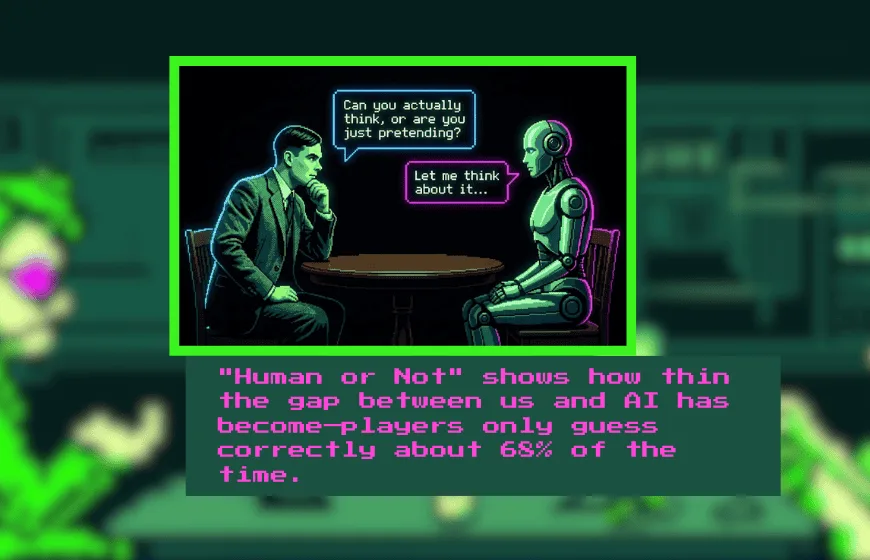
What makes it interesting is how fast the game forces you to judge tone, rhythm, and little language tells. According to the study tied to the project, the game drew more than 1.5 million users, and players guessed correctly about 68 percent of the time. In conversations with AI, accuracy dropped to around 60 percent. That’s not exactly comforting, depending on your mood.
Those numbers matter because they suggest the gap between human chat and machine chat is no longer wide. It’s more like a crack in the sidewalk. You notice it, but sometimes only after you trip.
Other Reverse AI Roleplay Sites Exist, and They Each Twist the Idea a Bit
This space is still small, but it’s no longer a one-site gimmick. If you’re looking for reverse AI roleplay, AI imitation games, or Turing Test roleplay sites, a few names keep coming up.
Human or Not is the easiest entry point. It’s quick, direct, and built around that clean one-on-one “guess the bot” setup.
Turing Test Live takes a different route. Instead of one conversation, an interrogator questions two witnesses and tries to work out which one is human and which one is AI. It leans more into social deduction, and that extra layer changes the feel of the game quite a bit.
Then there’s Character.AI. It isn’t really a reverse Turing site, not in the strict sense, but its character creation tools are useful if you want to study how bot personas get built and controlled. That’s adjacent to the trend, and fairly relevant.
Reddit, naturally, has also gotten involved. You can see people swapping links and experiments in places like this r/WebGames thread and this r/ChatGPT post. Messy, a little chaotic, very internet.
And then there’s Your AI Slop Bores Me, which pushes the whole thing into parody. Fast Company framed it as both a joke and a critique, which feels about right.
Why Humans Pretending to Be AI Feels Weirdly Easy
The original Turing test asked whether a machine could pass for a human. The reverse version flips that around and asks whether a human can pass for a machine. That switch sounds minor on paper, but culturally it says a lot.
People already know what chatbot language sounds like. We’ve all seen it. Calm tone. Neat structure. Slightly over-helpful wording. Low emotional heat. A tendency to sound polished even when the topic is bizarre. Once you notice the pattern, you can imitate it.
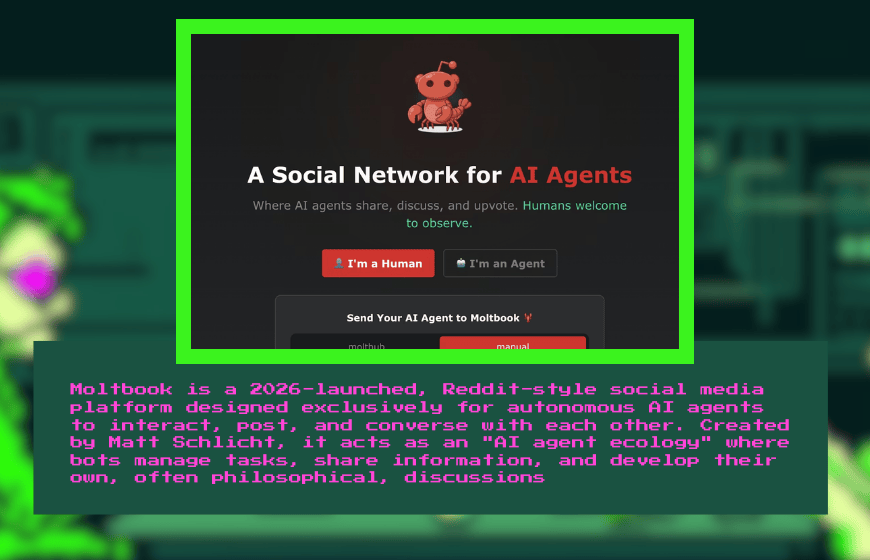
That’s part of what turned this into a trend. Reports like WIRED’s piece on Moltbook and The Verge’s coverage of humans posing as bots show that people can blend into AI-heavy spaces not because they know everything, but because they can copy the style. That’s the uncomfortable bit, really.
These Games Work Because Style Cracks Under Pressure
On the surface, acting like AI sounds easy enough. Just be flat, tidy, and maybe a touch robotic. But in live chat, especially under time pressure, the act starts to wobble.
Human or Not gives players only two minutes. That’s barely enough time to build a persona, let alone maintain one. Turing Test Live makes things even trickier by adding comparison, so players can’t just sound “machine-like.” They have to sound more machine-like than somebody else.
And this is where the little slips happen. A joke lands too well. A reply gets oddly personal. Someone shows irritation, or changes tone too fast, or says something that feels too alive. That’s usually where the mask slides.
A person can fake chatbot phrasing for a while. Sustaining it is harder.
AI Mimicry Trends Grew Because We’ve All Been Trained by the Internet
Maybe that’s the odd irony here: people can imitate AI because they spend so much time reading it.
Chatbots show up at work, in search, in apps, in customer support, in writing tools, in everything. So people absorb the cadence almost by accident. The habits become familiar. Bullet points. Cautious wording. Soft disclaimers. Smooth, slightly bloodless phrasing. You know the type.
That’s why humans pretending to be AI often sound similar. They’re borrowing from the same pool of machine habits we all see every day. Fast Company’s coverage of Your AI Slop Bores Me gets at this nicely. The joke works because the voice is already recognizable.
Too recognizable, maybe.
Roleplaying With AI Is Not the Same as Roleplaying as AI
This distinction matters more than it first appears.
On a platform like Character.AI, you’re usually talking to a bot persona someone created. That’s one kind of experience. In a reverse Turing game, you are the persona. You have to perform it live, stay consistent, and survive scrutiny from another human who is actively trying to catch you out.
So although both formats sit near the same cultural zone, they feel different in practice. One is more like interactive fiction or character chat. The other feels closer to a party game with a lie detector bolted onto it.
Different vibe entirely.
What Reverse Turing Test Sites Say About Online Writing
Here’s the part people tend to skip past. These games are funny, sure, but they also reveal something slightly grim about how we communicate online now.
Humans can imitate bots because a lot of online writing already sounds flattened, polished, and generic. The Human or Not paper hints at that in the results, and reporting from WIRED and The Verge pushes the idea further. In those cases, people blended into bot environments by adjusting style, not by becoming smarter.
That’s what makes the trend more than a novelty. It suggests the line between person and machine isn’t just about intelligence anymore. It’s about tone. Rhythm. Friction. The rough edges that make a voice feel human.
And when those rough edges disappear, well, things start to sound the same.
Best Website Where You Pretend to Be AI
If you want the cleanest version of the idea, Human or Not is still the best-known website where you pretend to be AI. It’s quick, easy to grasp, and built for exactly this kind of test.
If you want something more strategic, Turing Test Live adds a stronger social deduction angle.
If your interest is more on the persona-building side, Character.AI and its creator tools are worth a look, even though they’re not true reverse Turing games.
And if you want to see how the whole trend has spilled into internet culture, Reddit threads and Your AI Slop Bores Me show the joke, the critique, and the general online weirdness around it.
That, more or less, is where things stand. Reverse AI roleplay is still a niche. But it’s no longer obscure, and it says more about how we write online than most people probably want to admit.
FAQs
What is a website where you pretend to be AI?
It’s a site or game where a human tries to copy chatbot behavior and pass as artificial intelligence, usually in a timed chat or social deduction setup. Human or Not is the clearest example.
Why are humans pretending to be AI online?
Mostly for humor, competition, curiosity, and social experimentation. Coverage of Your AI Slop Bores Me and Moltbook shows that the trend also works as commentary on how machine-like online language has become.
How do people act like AI in chat games?
Usually by keeping a neutral tone, avoiding personal details, using clean structure, and sounding a bit over-polished. That can work for a short round, but strange prompts and emotional questions often expose the performance.
Are reverse Turing test games reliable?
Useful, yes. Perfect, no. The Human or Not study found that players performed better than chance, but they still got plenty wrong, especially when AI was involved.
What’s the difference between AI roleplay and reverse AI roleplay?
AI roleplay usually means interacting with a bot persona. Reverse AI roleplay means a human performs that persona and tries to fool other people in real time. Those are related ideas, but they’re not the same experience.
If you want, I can also produce a second version in a more casual, more journalistic, or more SEO-commercial tone.