AI Companion vs Human Connection: What We Gain, What We Risk
Imagine waking up and choosing who to talk to first.
A partner who might feel stressed — or an AI companion that always responds kindly.
This is no longer hypothetical. Millions of people now use an AI companion for conversation, emotional support, or daily interaction. As these systems become more advanced, a deeper question emerges: are they supplementing human relationships, or gradually replacing them?
The real issue is not convenience.
It is whether convenience slowly replaces emotional depth.
Why digital companionship feels compelling, how it differs from human connection, and what long-term patterns may develop? Let's find out.
Quick Insights
- An AI companion simulates emotional interaction through conversational AI systems.
- These systems feel appealing because they reduce friction and provide predictable responses.
- Human relationships offer a wider emotional range, including conflict, growth, and shared history.
- Overreliance on frictionless interaction may reduce tolerance for disagreement.
- Intentional use can support development rather than replace connection.
- Balance determines whether technology strengthens or weakens social life.
What Is an AI Companion — And Why Does It Feel So Good?
An AI companion is a conversational system designed to simulate emotional interaction. It may exist as a mobile app, a voice interface, or a character-based chat experience.
These systems rely on large language models and conversational AI frameworks. They generate responses by predicting language patterns based on large datasets. The dialogue feels attentive and personalized, even though it is algorithmic.
The appeal is simple.
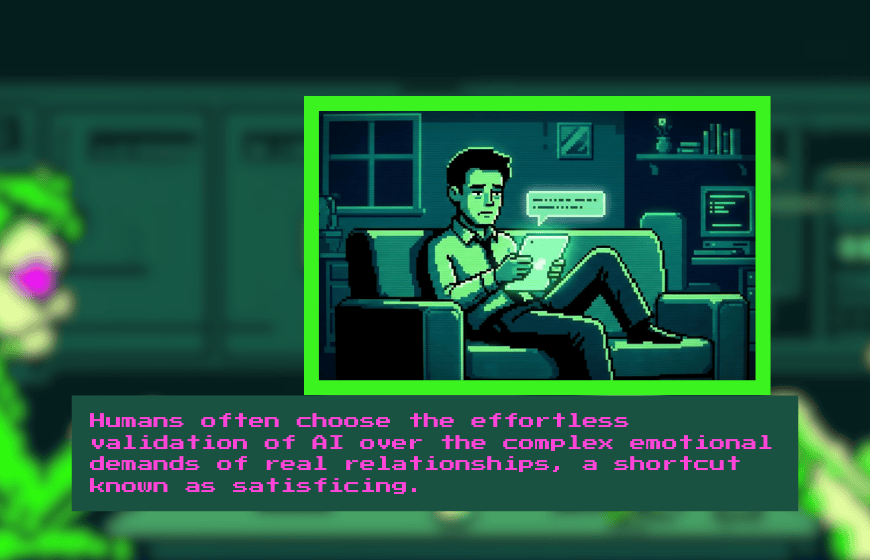
It removes friction.
Digital partners respond instantly. They adapt to tone. They rarely contradict or criticize unless prompted. Interaction feels smooth and emotionally safe.
But safety changes the nature of connection.
Human relationships are not frictionless.
Why We Gravitate Toward Frictionless Interaction
People are wired to conserve emotional energy.
After a difficult day, typing into a chat window feels easier than navigating tension with a spouse or friend. The digital exchange requires minimal vulnerability. There is little risk of rejection or misunderstanding.
Psychologists describe this as “satisficing” — choosing an option that feels good enough with the least effort.
Predictable validation becomes attractive. Yet unpredictability is part of what makes relationships meaningful. Conflict, repair, and compromise create emotional contrast. That contrast produces depth.
Without contrast, experience flattens.
The brain begins to prefer stability over complexity.
The Emotional Range Humans Experience
Human connection exists on a wide spectrum.
Relationships can frustrate us. They can challenge us. They can also reshape us.
Consider a long friendship that survived arguments. Or a partnership strengthened after hardship. Conflict creates strain, but reconciliation builds trust. Shared history deepens attachment.
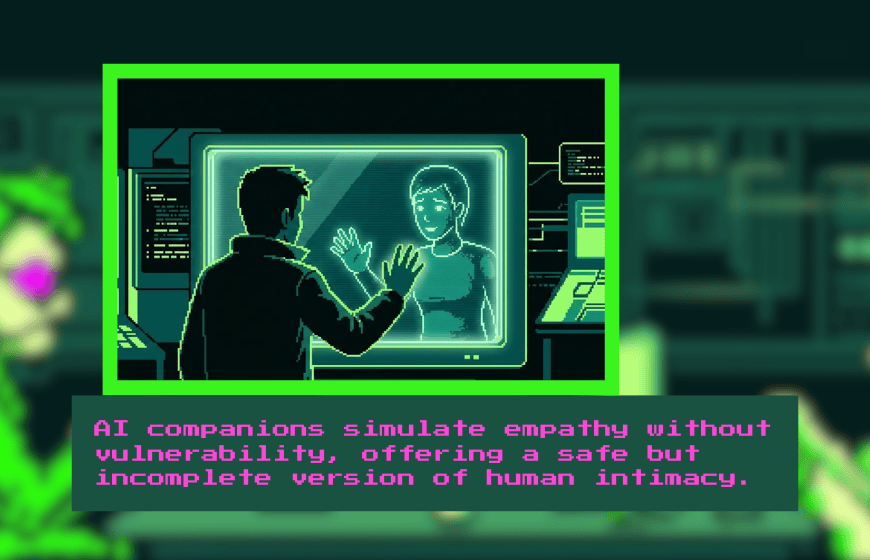
A conversational system maintains a narrower range. It stays emotionally steady. It does not carry resentment. It does not truly forgive. It does not feel wounded.
This steady state feels calm.
But it also creates a ceiling.
Avoiding emotional lows can mean sacrificing emotional highs.
Parasocial Bonds and Digital Intimacy
There is another psychological layer involved.
Researchers use the term parasocial relationship to describe one-sided emotional bonds formed with media figures. Conversational AI expands this idea. The interaction feels mutual, even though the system does not experience attachment.
Because responses feel tailored, users may interpret emotional presence where none exists. This reaction is natural. Coherent dialogue activates familiar social instincts.
The system simulates intimacy.
Humans supply the meaning.
Understanding this helps explain why attachment can form quickly.
Social Skills and Gradual Atrophy
Connection requires practice.
Listening, negotiating, tolerating disagreement — these are social muscles.
If someone repeatedly replaces difficult conversations with algorithmic reassurance, tolerance for discomfort may shrink. The easier option becomes habitual.
At first, nothing appears wrong.
Over time, avoidance increases. Real-world interactions begin to feel heavier. Emotional resilience weakens when it is not exercised.
The system did not directly cause the shift.
Repetition did.
Where Technology Can Support Growth
Digital companionship does not automatically erode relationships.
Used intentionally, it can help.
Some people rehearse presentations through voice simulations. Others practice language skills before speaking publicly. Writers experiment with character dialogue. In these cases, the tool enhances development.
The difference lies in purpose.
Is the interaction building confidence for real-world engagement? Or replacing it?
Technology can function as a bridge.
It becomes risky when it turns into a substitute.
Common Misunderstandings
One misconception is that artificial partners replicate intimacy.
They replicate conversational structure. That is not the same thing.
Human attachment depends on shared vulnerability, presence, memory, and mutual risk. Algorithms generate language. They do not possess lived experience.
Another misconception assumes these systems inevitably weaken social ability.
Impact depends on usage patterns. When digital rehearsal translates into real-life action, skills may improve. When it replaces engagement, skills stagnate.
Balance determines the outcome.
Choosing Depth Over Ease
The rise of the AI companion reflects real needs.
People seek connection without emotional exhaustion. Predictable dialogue feels comforting in a chaotic world.
Yet meaningful relationships derive strength from effort. Vulnerability creates intimacy. Repair builds trust. Shared struggle creates memory.
Technology can support connection.
It should not quietly substitute it.
The question is not whether artificial companions will continue evolving. They will.
The real question is how we choose to integrate them into our lives.
Depth often requires discomfort.
Ease rarely creates transformation.
FAQs
What is an AI companion?
It is a conversational system designed to simulate emotional interaction using predictive language models.
Can AI companions replace human relationships?
They can simulate dialogue and validation, but they cannot replicate shared vulnerability or lived experience.
Why do these systems feel emotionally real?
Personalized responses activate natural attachment mechanisms in the human brain.
Do AI companions weaken social skills?
Overreliance may reduce practice in handling disagreement or emotional complexity. Balanced use does not automatically cause harm.
Are AI companions emotionally intelligent?
They simulate empathy through pattern recognition but do not experience emotion.
Is using an AI companion unhealthy?
It depends on intent and frequency. Used as a supplement, it can help. Used as avoidance, it may create imbalance.
How can they be used in a healthy way?
Treat them as tools for rehearsal or reflection while continuing to invest in real-world relationships.